
Learn How To Manage Your Rental Property on Airbnb
Get access to our 5-day training course on managing your vacation rental property in Dubai.
Download Guide
Every property owner we work with has asked us some version of these questions in the past three weeks;
Should I sell my property?
Should I hold?
Is the property market going to crash?
At Homevy, we manage the best short-term rental properties across Dubai. We see the bookings. We see the cancellations. We talk to owners every single day.
So instead of giving you a “hold and pray” advice, here’s what we’re actually seeing across board, what the data says, and a framework for making the right decision based on YOUR situation – not someone else’s.
Let’s get into it.
Just before we dive into the meat of this article, it’s essential we go back in time a little.
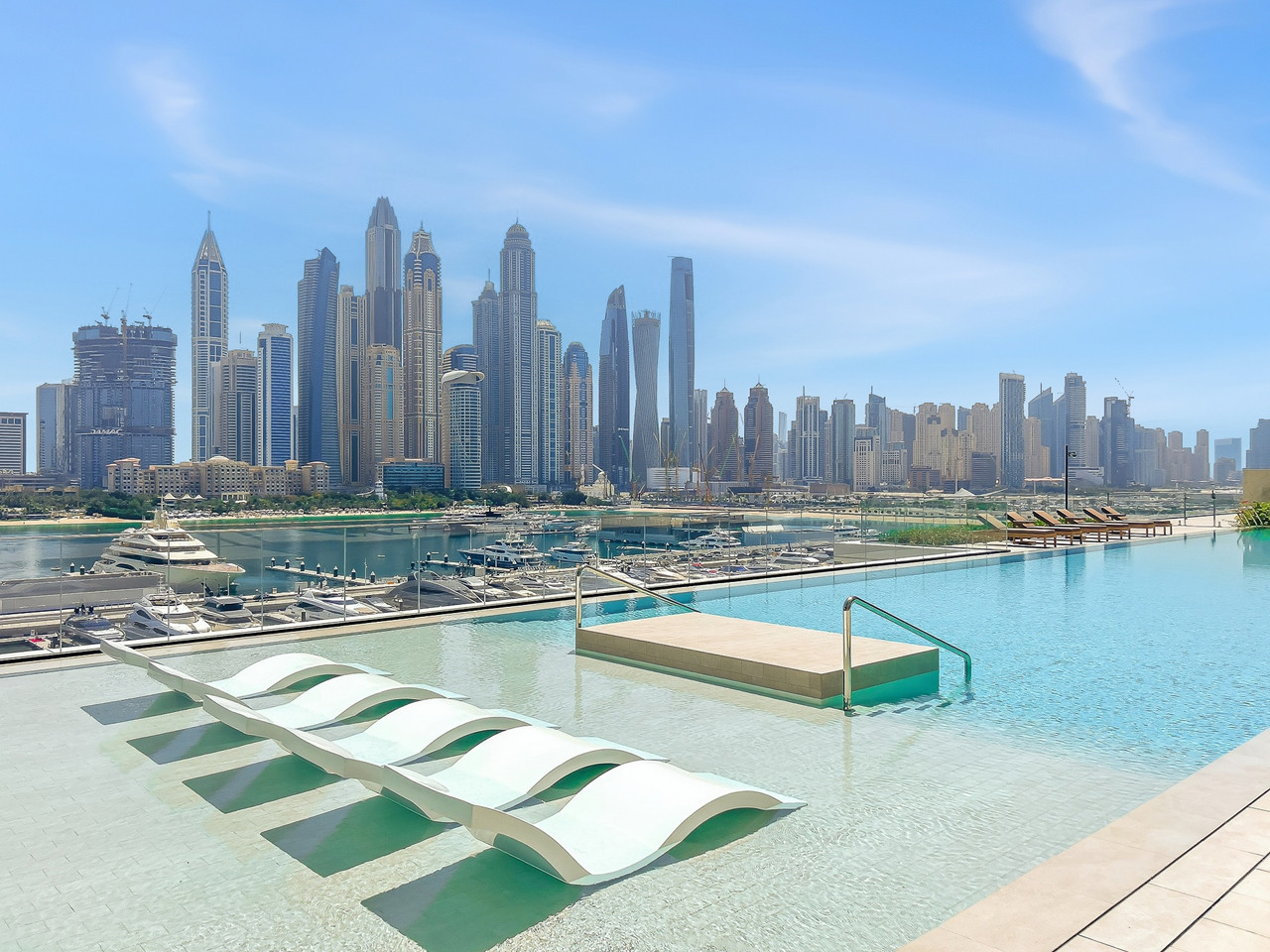
Image by Homevy
Dubai has recovered from every previous property crisis, but this is the first time the city itself has been physically struck.
Now before you panic, let’s look at what actually happened each time:
Dubai recovered five to six years later.
Iran-Israel 2026: This one is different because Dubai was physically affected.
The UAE intercepted 96% of incoming threats, and infrastructure damage was limited, but Dubai’s “safe haven image” took a blow.
And that image is what brought 9,800 millionaires and $63 billion in wealth to Dubai in 2025 alone.
So is this pattern going to hold? – We don’t know yet.
What we do know is that every previous recovery was driven by specific factors (government action, visa reform, global capital flows) and those same factors will still be in play.
P.S: We envision after the war is over, Dubai would loosen up on its visa/residency laws & business laws to encourage people to return to the country.
| Crisis | Year | Price Drop | Recovery Time | What Drove Dubai’s Recovery |
| Global Financial Crisis | 2008-2009 | 50% | 5-6 years | Govt intervention, visa reform, Expo bid |
| Oil Price Slump | 2014-2019 | 25-30% | 4-5 years | Diversification, tourism growth |
| COVID-19 | 2020 | 5-10% | 12-18 months | Fast reopening, Golden Visa, remote workers |
| Russia-Ukraine | 2022 | None (positive) | N/A | Capital inflows from conflict zones |
| Iran-Israel | 2026 | 5-18% so far | TBD | UAE defence, structural demand, visa programs |
Without a doubt, the US-Iran conflict has reduced the price of Dubai properties.
Property prices in Dubai have dropped 5-18% since the February 28 escalation, with prime locations like Downtown and Palm Jumeirah holding up better (for now).
In a recent report by Reuters, the publication mentioned the Dubai property market is now showing signs of weakness, with data analysts showing reduced transaction volumes.
Image by Homevy
This was further confirmed earlier last week by a Goldman Sachs report stating the total transaction values in March were down 31% year over year and 51% month over month since conflict began.
This is a huge drop compared to April 2024 – during the Dubai floods, which had brought on a 19% month on month decline.
All of this is expected though, given that the war involving Israel, the US, and Gulf states has weakened Dubai’s image as a safe place to be.
But even more so because the Dubai market has experienced a strong growth over the past five years – and it was already expected to slow.
You should seriously consider selling your Dubai property if:
Fitch Ratings predicted up to a 15% correction even before the war…and now, prices are already down 7-18% in some segments.
If you need access to capital, waiting may force you into lower offers. On the flip side, selling early preserves your equity and profits.
For most owners we talk to, we advise to not sell your Dubai property if:
Homevy Tip: 60% of January 2026 residential transactions were cash deals. That means the market has low leverage, which means low forced-selling pressure.
This is the most aggressive play, and it’s not for everyone.
Consider buying properties in Dubai right now and at low prices if;
Homevy Tip: If the conflict escalates further, the buy case won’t make much sense. But historically, the investors who moved during Dubai’s downturns came out significantly ahead of those who waited for the headlines to clear.
When you read “Dubai real estate lost $250 billion,” that’s the market capitalisation of listed real estate companies dropping.
What’s happening to actual properties?
Listing price reductions are around 5-18%, depending on the segment. Some distressed sellers are offering deeper discounts (20-35% in a few cases).
Homevy Tip: 3,570 property sales transactions still happened between March 2-9, totalling AED 11.93 billion. Viewing activity rose 75% in the latter half of that first week compared to the first three days of unrest.
The market didn’t freeze. It slowed down – and there’s a difference.
| Metric | What Headlines Say | What’s Actually Happening |
| DFM Real Estate Index | Crashed 18-30% | Tracks listed company shares, not property values |
| Emaar share price | Fell 22% (AED 17 to AED 13.30) | Stock price, not property price |
| Reduced listing prices | “Market collapse” | 5-18% reductions depending on segment |
| Transaction volume (Mar 2-9) | “Market frozen” | 3,570 deals worth AED 11.93 billion |
| Viewing activity | Not mentioned | Up 75% in second half of week one |
Over 80,000 bookings were cancelled across Dubai in the first week after the escalation.
Image by Homevy
Regional tourism revenue is dropping by an estimated $600 million per day. At Homevy, we saw a 70% drop in tourism bookings in the first week of the conflict.
That’s the reality…and we’re not going to sugarcoat it.
But the demand hasn’t disappeared. It’s shifted.
In Facebook groups and WhatsApp communities, people are still actively asking for properties. They want deals. They want monthly stays. They want to move with their pets.
The pool is smaller, but it’s not empty.
Areas hit the hardest include Downtown, Palm Jumeirah, Dubai Marina, and JBR because they depend heavily on tourist traffic. Areas with stronger long-stay or corporate demand are holding up better.
Here’s what we’re doing at Homevy to still capture demand for our property owners
We’re also offering pet friendly stays in Dubai in the following apartments, and even sweeter, with a huge 20% discount off monthly stays;
Homevy Tip: Here’s the counterintuitive trap we’re seeing: owners who want to sell their property but are switching to long-term rental. That’s backwards.
If you want to sell, long-term rentals locks you in with a tenant and makes selling nearly impossible.
Short-term (especially monthly stays) keeps that door open – and this is something we’re currently doing for our owners – more monthly stays. Send us a Whatsapp message if you’d like to get started.
Whether you should sell, hold, or buy depends on four things:
| Factor | Sell Signal | Hold Signal | Buy Signal |
| Financing | Highly leveraged, payments strained | Cash buyer, no mortgage pressure | Cash ready to deploy |
| Time horizon | Need liquidity in 6-12 months | 3-5+ year hold comfortable | 5+ year investment horizon |
| Property location | Oversupplied area (JVC, Dubai South) | Prime area (Downtown, Palm, DIFC) | Targeting distressed prime assets |
| Rental strategy | STR income collapsed, can’t pivot | STR pivoting to monthly stays | Targeting high-yield rental areas |
| Cash flow | Negative or break-even | Positive; yield covers costs | Buying for yield, not appreciation |
| Risk tolerance | Low; need certainty | Medium; can weather volatility | High; comfortable with uncertainty |
Not sure where you fall? Send Homevy your property details and we’ll give you an honest assessment.
Use our free Airbnb Income Calculator to see what your property could earn with the right strategy.
Most standard UAE property insurance policies exclude “acts of war” unless a specific terrorism or war rider is added.

Image by Homevy
With drone debris hitting residential areas on Palm Jumeirah and hotels across the city, this is no longer a theoretical question.
If your building sustained damage, your standard policy may not cover it.
Here’s what you should check right now:
Nobody can predict how long the conflict will last.
But there are three realistic paths from here, and each one means something different for your Dubai property.
Scenario 1: Conflict contained by Q2 2026. This is the optimistic case.
If ceasefire talks gain traction and airline routes stabilise, 60-80% of paused property deals are expected to close. Tourism starts recovering by Q3-Q4. Prices stabilise, and the pattern looks like a faster version of the COVID recovery.
Scenario 2: Extended conflict through 2026. A mild correction of 5-15%, concentrated in oversupplied areas.
Prime locations holds or dips slightly. Short-term rental operators shift to monthly stays. Long-term rental demand stays flat. Capital flight continues in both directions: into Dubai from conflict zones, out of Dubai from risk-averse Asian investors.
Scenario 3: Major escalation and no unknown territory. No historical comparison for Dubai. The only honest answer here is: nobody knows.
What to watch for:
Regardless of whether you plan to sell, hold, or buy, there are six things you should do this week.
We signed a new property in Liv Marina last week.
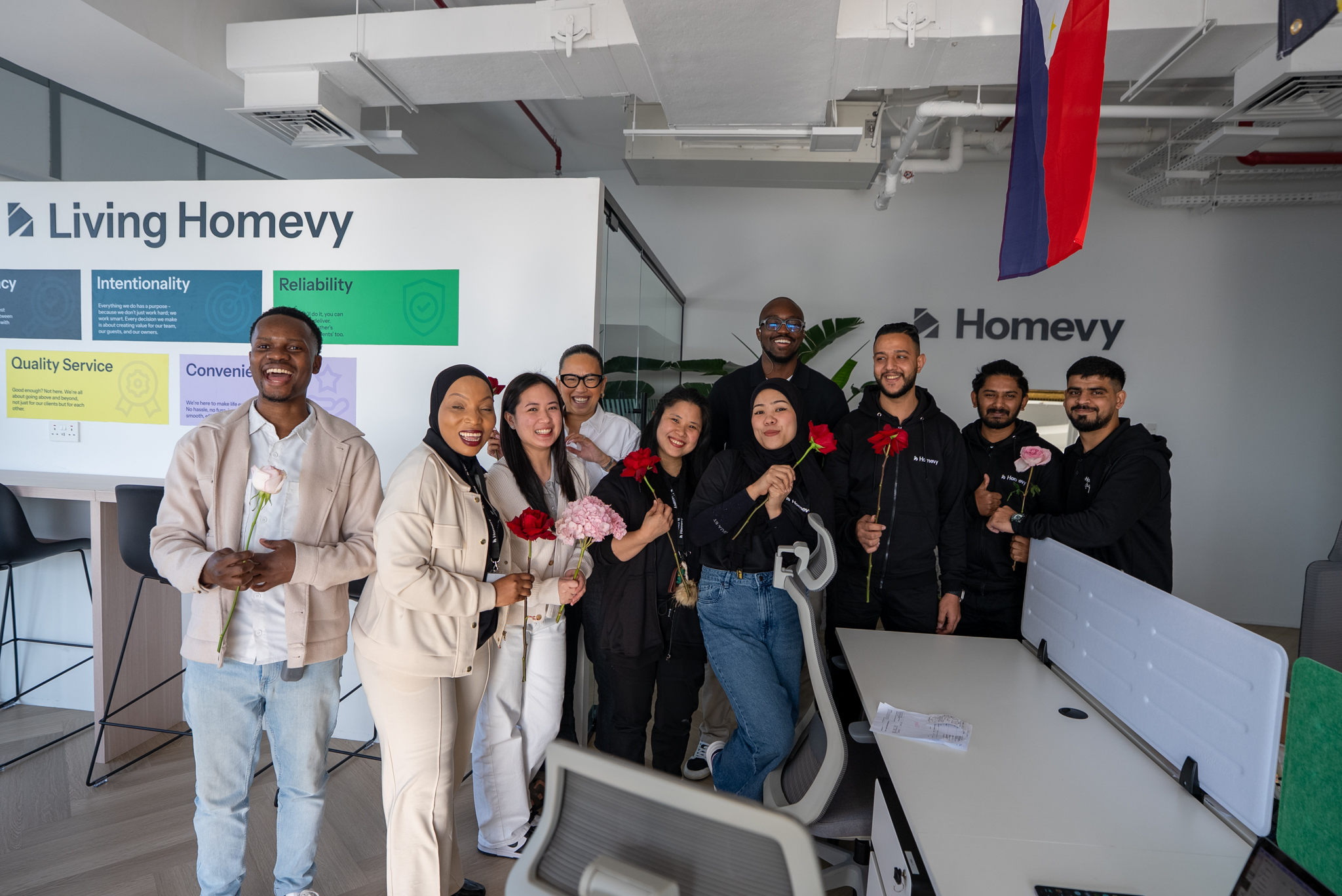
Image by Homevy
While other holiday homes companies may be calling owners to say they can’t honour their contracts, we’re onboarding new units and adapting strategies in real time.
Here’s an excerpt review from Usman, one of our property owners;
“It’s truly impressive how you guys have been transparent with me through this entire period; with emails and Whatsapp messages. I’m optimistic that Dubai will get through this, and we shall all still be standing together”
Transparency has always been part of our core values, and now even more with everything that’s happening. We’re keeping it real with our owners, letting them know what we’re doing and how we’re doing it.
Prices have dropped 5-18% depending on area and property type, but a full crash (30%+) would require prolonged, escalating conflict combined with mass expat departures. That hasn’t happened.
Dubai’s market is heavily cash-driven (60% of January 2026 transactions), which limits forced-selling pressure.
Most standard UAE insurance policies exclude acts of war.
Check your policy for war and terrorism exclusion clauses, and ask your insurer whether intercepted missile debris is covered. Homevy is reviewing coverage for every property in our portfolio.
In most cases, no.
Long-term tenants in this market are demanding rates well below market value, and locking into a long-term contract prevents you from selling or adjusting when the market recovers.
Monthly stays (three to six months) are the smarter middle ground. Homevy is advising all its owners to consider this approach.
Dubai’s long-term fundamentals remain strong: population growth of 5.2%, AED-USD peg stability, no income tax, and continued infrastructure investment.
The short-term outlook depends on the conflict’s duration. For cash buyers with a three to five year investment ROI timeline, current pricing represents a buying opportunity.
Dubai recovered from the 2008 crash (50% drop, recovered in 5-6 years), the 2014-2019 oil slump (25-30% drop, recovered in 4-5 years), and COVID (12-18 month recovery).
Each recovery was stronger than the last, driven by government policy and structural demand.
Yes. We’re still signing new properties, still generating bookings, and still adapting strategies in real time.
We use a performance-based model (no guaranteed rent that falls apart in downturns) and we’re pushing monthly stays, pet-friendly options, and aggressive pricing to capture every booking we can. Reach out on WhatsApp for a free assessment.
Consider selling if you’re highly leveraged with strained mortgage payments, need liquidity within six to 12 months, own property in an oversupplied area, or bought at 2024-2025 peak prices with thin equity.
If your cash flow is positive and your horizon is long, holding is almost always the better play.
For most owners: no. Not right now.
If you’re cash-flow positive, in a prime area, and have a three to five year investment ROI timeline, holding is better.
Dubai recovers. It always has.
The 3,570 transactions that happened in the first week of March, the 75% rebound in viewings, and the 60% cash-buyer ratio all point to a market that’s slowing, not collapsing.
But if you’re leveraged, cash-strapped, or stuck in an oversupplied segment with no rental income… waiting could cost you more than acting now.
The sell/hold/buy decision isn’t about “the market.” It’s about YOUR situation. Your financing, your location, and time horizon. Your cash flow as well.
Run those four variables through the framework above, and you’ll have your answer.
At Homevy, we manage short-term rental properties across Dubai. We’re seeing this play out in real time. We’re not trying to sell you anything. We’re trying to help you make the right decision with real data.
If you own a property in Dubai and you’re genuinely unsure what to do, talk to us.
We’ll give you an honest assessment based on your specific property, your numbers, and what we’re seeing in the market right now.

Thank you for reading! I'm excited to help homeowners and guests alike discover the benefits of short-term rentals with HOMEVY. Stay tuned for more updates and helpful tips on the blog.



Get access to our 5-day training course on managing your vacation rental property in Dubai.
Download Guide