
Learn How To Manage Your Rental Property on Airbnb
Get access to our 5-day training course on managing your vacation rental property in Dubai.
Download Guide
The US-Iran war has brought up the short-term rental vs long-term rental debate yet again in Dubai.
Before February 28, this was an easy conversation. Short-term rentals in Dubai were printing money. At Homevy, we had occupancy rates above 90%, and nightly rates that made long-term landlords jealous reconsider their options.
Then the missiles came and 80,000+ bookings were cancelled in a week. Occupancy crashed from 90% to 61%. And suddenly…every property owner in Dubai is asking:
Should I switch to long-term rental?
At Homevy, we manage the best short-term rental properties across Dubai. We’ve been in the middle of this since day one. And the answer isn’t what most people expect.
Let’s break it down.
Short-term rental occupancy across Dubai plummeted after the February 28 escalation, dropping from 90-95% to below 70% for many operators by mid-March 2026.
Over 80,000 short-stay bookings were cancelled in the first week alone, and regional tourism revenue dropped by an estimated $600 million per day.
Image by Homevy
Some major operators, including bnbme Holiday Homes (which manages around 160 properties), reported occupancy collapsed from 90% on February 28 to below 20% by mid-March.
At Homevy, we saw a 70% drop in tourism bookings in the first week of the conflict.
Yet, the truth is… the demand didn’t completely disappear, it just… shifted.
In Facebook groups, WhatsApp communities, and direct enquiries, people are still actively looking for properties in Dubai. They want deals. They want monthly stays. They want pet-friendly options.
So is short-term rental dead in Dubai because of the Iran war? No, not even close. But the strategy has to change. And if you’re thinking “well, I’ll just switch to long-term rental then”… hold on.
No, long term rental isn’t safer during the Dubai war crisis – especially if you’re looking to sell your property.
The assumption is: short-term is risky, so switch to long-term for stability. Now this sounds logical on paper, but here’s the actual reality;
Long-term rental tenants in this market are demanding rates well below market value. Why? Because they know landlords are nervous, and of course, supply is rising.
 Image by Homevy
And tenants are using the US-Iran war’s impact as a bargaining chip.
Also landlords on long-term contracts are now facing a new problem: tenant defaults. Job cuts triggered by the economic fallout of the Israel-US-Iran conflict are hitting Dubai’s workforce.
When employers “reassess” their Dubai operations, their employees’ rental contracts become collateral damage.
But wait…it gets worse.
One of our property owners had three units rented on long-term leases. Sounds stable, yeah?
Except…his tenants were through a holiday homes company that was “subleasing” them. When the war hit and bookings collapsed, that company called him and said they couldn’t honour the contract anymore.
He lost his long-term rental income overnight.
Now when people buy properties in Dubai, they often use cheques. These cheques aren’t backed the same way as in other countries. If the buyer’s financial situation changes (and right now, a lot of situations are changing), those cheques bounce.
Sales fall through AND deposit cheques become worthless.
Need help figuring out your best rental strategy? Send us your property details on WhatsApp and we’ll give you an honest breakdown.
What does the data look like when you put short-term and long-term rental side by side during the current war crisis? Here’s the comparison every Dubai property owner needs to see;
| Factor | Short-Term Rental | Long-Term Rental |
| Annual yield (normal market) | 7-12% | 4-6% |
| Annual yield (current market, March 2026) | 3-7% (reduced but recovering) | 3-5% (tenants negotiating hard) |
| Occupancy risk | High since the war; dropped sharply post-escalation | Lower on paper, but defaults and early terminations rising |
| Flexibility to sell | Full flexibility; no tenant lock-in | Very difficult; tenant has legal rights for lease duration |
| Cash flow timing | Weekly/monthly income | Quarterly or annual cheque payments |
| Operational cost | Higher (furnishing, cleaning, management) | Lower (minimal ongoing costs) |
| Pricing control | Can adjust daily based on demand | Locked for 12 months at contract rate |
| Licensing in Dubai | Holiday home permit required (DET) | Ejari registration required |
| Guest/tenant quality risk | Short stays = less damage risk per stay | Long stays = more wear over time |
| Ability to pivot strategy | Can switch to monthly stays in 24 hours | Locked for minimum 12 months |
What matters most during the Iran war is Flexibility.
In a market this volatile, being locked into a 12-month contract at a below-market rate is worse than having a few empty weeks on short-term while you adjust your strategy.
Can you really afford today’s low rates for an entire year when the market could recover by Q3? 👀
Monthly stays of three to six months are the middle ground that gives Dubai property owners the best of both worlds during the US-Iran conflict. Neither nightly rentals nor 12-month long-term leases address what the market actually needs in 2026.
Monthly stays do.
Here’s why we’re telling every property owner in the Homevy portfolio to consider this approach:
At Homevy, we’re pushing monthly stays with a 20% discount to lock in occupancy. We’re also accepting pets at select properties. Between these two moves, we’re filling units that would otherwise sit empty.

Photo by Josh Sorenson
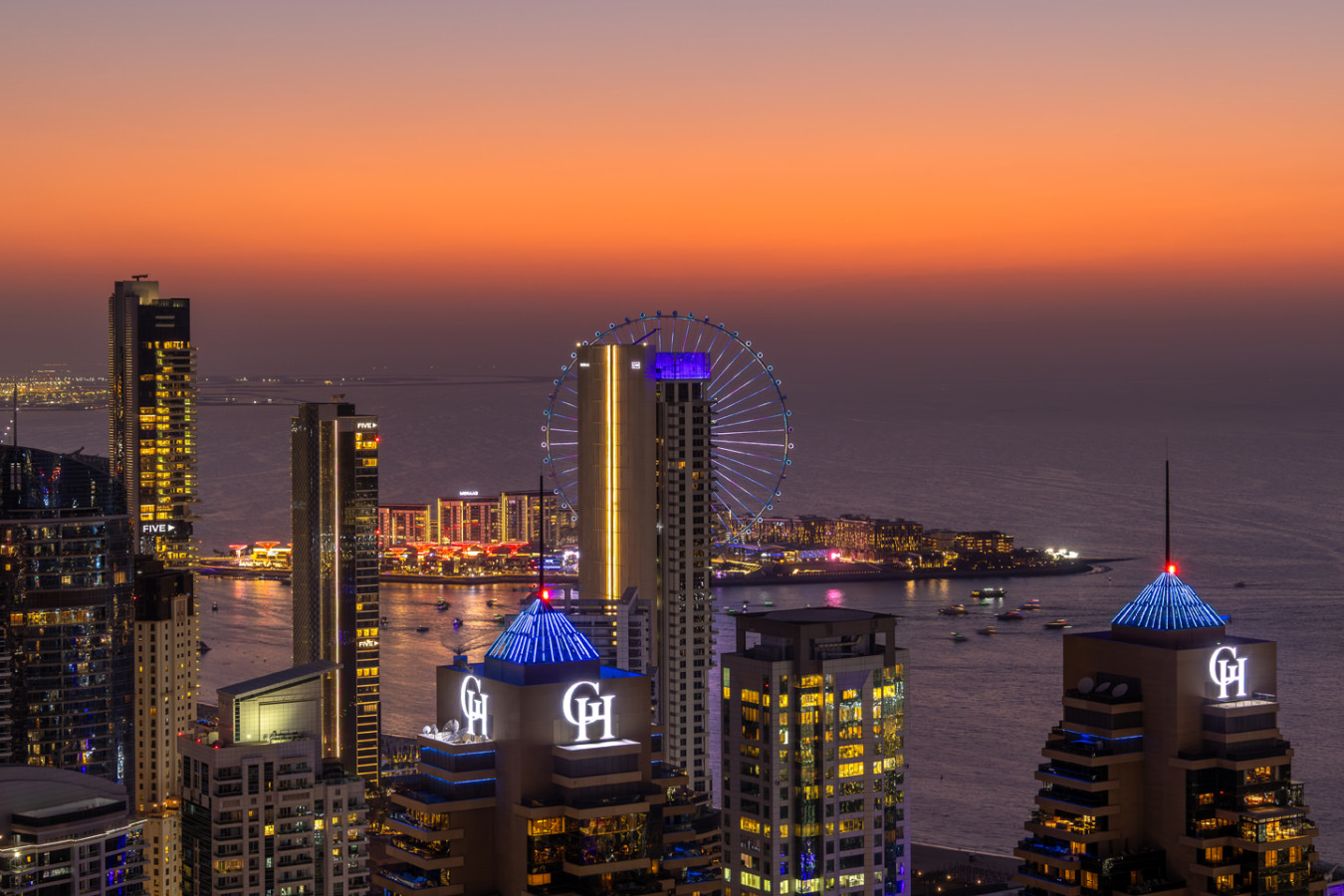
We’re currently offering pet-friendly monthly stays in buildings like O Ten, Aykon Tower C, Trillionaire Residence, Palace Residences, Harbour Gate, Icon Bay, and Petalz by Danube.
In a recent conversation with Kyle Johnson, the CEO of Homevy, he advises owners who want to panic-switch to long-term: if you want to sell your property eventually, long-term rental is the worst thing you can do during a crisis like this. It locks you in with a tenant and makes selling nearly impossible. Short-term, especially monthly stays, keeps that door open.
Want to list your property for monthly stays? Get started with Homevy and we’ll handle everything from pricing to guest management.
If you’re an owner that wants to sell your Dubai property, don’t switch to long-term rental.
You want to eventually exit this property, so you shouldn’t lock yourself into a 12-month contract with a tenant who has legal protections under Dubai tenancy law.

Image by Homevy
A tenant can easily refuse to leave even if you want to sell.
If selling is anywhere on your radar in the next 12-18 months, monthly short term stays is the only safe strategy. You get cash flow now. You keep the flexibility to list for sale. And when the market recovers, you can switch back to nightly rates.
On the other hand, if you have zero intention of selling for the next three to five years and you’re cash-flow positive… then yes, a solid long-term tenant at a fair rate makes sense.
How do you know if to switch to long term or short term rentals in Dubai based on the US-Iran war?
Ask yourself two questions:
If selling is on the table, stay on short-term. If you’re holding long-term and cash flow is comfortable, either model works.
Half the staff at some major holiday homes operators in Dubai are on unpaid leave or reduced pay since the Iran war began. Marketing budgets have been slashed.
A well-known operator, bnbme holiday homes, has publicly acknowledged the severity of the war’s impact. Several companies have already told owners they cannot honour their guaranteed rent contracts.
This matters because it exposes the flaw in the “guaranteed rent” and fixed price model that a lot of operators sell to property owners. The pitch sounds great: “We’ll guarantee you AED X per month regardless of occupancy.”
But when occupancy crashes overnight because of a war nobody predicted, those guarantees collapse.
At Homevy, we’ve always operated on a performance-based model. We earn when you earn. That means we have every reason to fight for every booking, adjust pricing aggressively, and find creative ways to fill your property.
We’re not sitting on a guaranteed rent commitment we can’t pay; we’re hustling to capture every piece of demand that exists.
Is it harder since the US-Iran conflict started? Yes, obviously lol. Can we guarantee the same returns as six months ago? No, and anyone who tells you they can is either lying or playing games.
But here’s what we can tell you: we signed a new property in Liv Marina last week. We’re onboarding new units and adapting in real time.
Here’s what Usman, one of our property owners, recently said: “It’s truly impressive how you guys have been transparent with me through this entire period; with emails and WhatsApp messages. I’m optimistic that Dubai will get through this, and we shall all still be standing together.“

Image by Homevy
Location decides the rental model in Dubai, not your personal preference. And since the US-Iran war began, this distinction matters more than ever because the conflict hasn’t hit all areas equally. Here’s how it breaks down by neighbourhood.
| Area | Best Strategy During the War | Why |
| Dubai Marina | Monthly stays (STR) | Tourist bookings down, but strong demand for 3-6 month stays from professionals and relocators |
| Downtown Dubai | Monthly stays (STR) | Premium location commands higher rates even during the conflict; strong corporate demand |
| Palm Jumeirah | Monthly stays or selective STR | High-end properties still attracting regional families and corporate housing |
| JBR | Monthly stays (STR) | Beach location maintains lifestyle appeal; domestic weekend demand still exists |
| Business Bay | LTR or monthly stays | Strong corporate tenant pool; less tourism-dependent |
| JVC / JVT | LTR if possible | Oversupplied area; STR rates won’t cover costs at current occupancy levels |
| Dubai South | LTR | Low tourist demand pre-war; even lower now. Long-term corporate tenants near Al Maktoum |
| DIFC | Monthly stays (STR) | Financial district; corporate housing demand remains strong |
Prime locations with different demand sources still work for short-term and monthly stays.
Not sure which strategy fits your specific building or area? Use our free Airbnb Income Calculator to see what your property could realistically earn in the current market.
Image by Homevy
Based on what we’re seeing across the Homevy portfolio and the wider Dubai market, here are the specific moves that are working;
1. If you’re currently on short-term rental: Don’t panic-switch to long-term. Switch to monthly stays. Drop your nightly rate by 15-25% to capture whatever bookings exist. List on every channel: Airbnb, Booking.com, Facebook groups, WhatsApp communities, direct outreach. Consider pet-friendly stays; it’s a segment with real demand that most operators ignore.
2. If you’re currently on long-term rental: Don’t break your existing contract. But when it’s up for renewal, think carefully about whether to re-sign at a low rate for another 12 months or switch to monthly stays with a property management company like Homevy.
3. If you’re considering buying a property: The rental strategy you plan to use should be part of your purchase decision. Properties in prime areas with strong monthly-stay demand are better bets than studios in oversupplied areas that only worked as cheap nightly Airbnbs.
4. If you’re thinking about selling: Do NOT switch to long-term rental first. That’s the single worst move you can make. Monthly stays keep your property available for viewings and sale while still generating income.
Read our full guide on whether you should sell your Dubai property during the US-Iran war for a detailed decision framework.
Here are the questions Dubai property owners are asking us since the conflict started, along with direct answers based on what we’re seeing across the Homevy portfolio and the wider market.
Short-term rental yields have dropped from the 7-12% range to approximately 3-7% depending on location and strategy.
It’s less profitable than before, but for properties with an active management approach (monthly stays, aggressive pricing, multi-channel distribution), it still outperforms long-term rental in most cases. Homevy is generating bookings across its portfolio through this approach.
In most cases, no. Long-term tenants in this market are demanding rates well below market value, and a 12-month contract locks you in at that low rate. Monthly stays (three to six months) are the middle ground.
Monthly stays are rentals of three to six months, usually fully furnished. They sit between traditional short-term (nightly) and long-term (12 months+).
They’ve become the go-to strategy in Dubai 2026 because they offer consistent cash flow without long-term lock-in, capture the demand that exists during the Iran war (relocators, corporate housing, families), and keeps the flexibility to sell or re-enter the nightly market when conditions improve.
No. Short-term rental in Dubai requires a holiday home permit from the Department of Economy and Tourism (DET). Operating without one risks fines of up to AED 200,000. Long-term rental requires Ejari registration through RERA. Homevy handles all licensing and compliance for properties in our portfolio.
Dubai Marina, Downtown Dubai, DIFC, and Palm Jumeirah are great areas for short-term and monthly stay rentals due to diverse demand sources (corporate, relocations, domestic, and remaining tourism). Aareas like JVC, JVT, and Dubai South are better suited for long-term rental strategies during the Iran war.
We’re switching to monthly stays, adjusting pricing aggressively to capture demand, accepting pets at select properties, distributing across every channel (Airbnb, Booking.com, Facebook, WhatsApp, direct outreach), and being transparent with owners about market conditions.
We’re still signing new properties and still generating bookings. Reach out on WhatsApp for a free assessment.
Neither short-term nor long-term rental is “safe” during the US-Iran war. Both models are under pressure, and both have risks that didn’t exist three months ago.
But they’re not under the same kind of pressure.
Short-term rental took the bigger immediate hit, but also gives you the tools to respond: daily pricing adjustments, strategy pivots, monthly stays, new channels, pet-friendly segments. You can move.
Long-term rental looks stable on paper until your tenant defaults, your holiday homes subletter defaults, or you’re locked into a 12-month contract at a rate you’ll regret by September.
For most property owners in prime Dubai locations, a monthly stays strategy is better in 2026. It gives you yield, flexibility, and optionality. Three things that matter more during a war than they’ve ever mattered before.
At Homevy, we’re not waiting for the war to end to figure this out.
We’re adjusting every single day based on booking data, owner conversations, and real market signals. If you own a property in Dubai and you’re not sure which rental strategy makes sense during the conflict, talk to us on WhatsApp. We’ll give you an honest assessment based on your specific property, your location, and your financial situation.

Thank you for reading! I'm excited to help homeowners and guests alike discover the benefits of short-term rentals with HOMEVY. Stay tuned for more updates and helpful tips on the blog.


Get access to our 5-day training course on managing your vacation rental property in Dubai.
Download Guide