Learn How To Manage Your Rental Property on Airbnb
Get access to our 5-day training course on managing your vacation rental property in Dubai.
Download Guide
Airbnb vs Booking.com is a decision most short-term rental hosts eventually have to make. Which platform brings more bookings? Which one charges less? And which is actually better for your property?
The answer isn’t as simple as picking one over the other. Airbnb and Booking.com attract different types of guests, have different fee structures and offer different booking and payout experiences.
At Homevy, we provide full service airbnb management in Dubai across multiple booking channels, so we’ve seen how channel performance can vary from one property to another.
In this guide, we’ll compare Airbnb vs Booking.com on fees, guests, payouts, cancellations and more, then share what we’ve learned from managing properties in Dubai.
So, let’s get into it.
Airbnb attracts guests seeking unique experiences, while Booking.com appeals to travelers who prefer traditional accommodation and last-minute bookings.
Airbnb offers a lower fee structure for hosts. Booking.com charges a higher commission but displays prices without guest service fees.
Airbnb provides stronger and more consistent host protection through its AirCover program. Booking.com offers protection tools, but coverage often varies by region.
Airbnb can deliver higher nightly rates and Booking.com offers consistent booking volume; using both platforms can increase bookings by 15–25 percent.
Homevy maximizes ROI through dynamic pricing, professional photography, listing descriptions, and multi-platform management.
High-quality photos, optimized descriptions, and SEO-friendly listings help properties rank higher and attract better bookings.
Listing on both platforms while leveraging Homevy’s full-service management helps hosts maximize revenue, reduce risk, and maintain high occupancy.
| Airbnb | Booking.com | |
| Host fees | 15.5% host-only fee for most home hosts in 2026 | Commission varies by property and market |
| Guest type | Strong fit for holiday homes, unique stays and experience-led trips | Broad accommodation audience, including hotels and holiday rentals |
| Payouts | Payout timing depends on Airbnb’s applicable payout schedule | Payment timing depends on the property’s payment setup |
| Cancellations | Hosts choose from Airbnb’s available cancellation policies | Hosts set cancellation policies based on their property’s setup |
| Best for | Hosts targeting holiday-home and experience-led travellers | Hosts wanting access to a broad accommodation marketplace |
| For Dubai hosts | Useful for reaching holiday-home demand | Useful for reaching an additional booking audience |
So, should you choose Airbnb or Booking.com?
Neither platform is automatically better for every short-term rental. Your choice depends on your property, target guests, fees, payout setup and how you manage bookings.
At Homevy, we take a multi-channel approach. For the properties we manage in Dubai, we distribute listings across platforms including Airbnb, Booking.com and Vrbo, alongside direct booking channels.
That means the question isn’t always “Airbnb or Booking.com?” For many properties, using both can create more opportunities to reach different types of guests, as long as your pricing, calendars and guest management are properly coordinated.
Airbnb works better for guests looking for unique experiences and personal connections, while Booking.com attracts travelers who prefer traditional accommodation standards. Many hosts maximize bookings by listing on both platforms.
Deciding between Booking.com and Airbnb comes down to three things:
Here is exactly what each platform brings to the table:
1. Airbnb has carved out a unique position in the market, particularly dominating the experience-driven travel sector.
With over 4 million hosts worldwide and a presence in more than 100,000 cities, Airbnb is synonymous with unique stays and local experiences.
Their platform has facilitated 1.4 billion guest arrivals since launch.
2. Booking.com, on the other hand, takes a different approach. With 28+ million reported listings across 228 countries, they’ve built an empire that caters to both traditional hotel bookers and vacation rental seekers.
Their platform excels in European markets and often attracts travelers who compare various accommodation types before booking.
In the end, both platforms can be highly effective for short-term rentals; the best choice ultimately depends on the host’s goals and the type of guests they want to attract.
Airbnb and Booking.com fees aren’t as straightforward as comparing two percentages.
In Dubai, Airbnb hosts have already moved to the single-fee structure, with most hosts paying 15.5% of the booking subtotal from their payout.
Booking.com typically charges hosts a commission of around 10% to 25%, although the exact rate depends on the property’s agreement and any additional visibility or promotional programmes it joins.
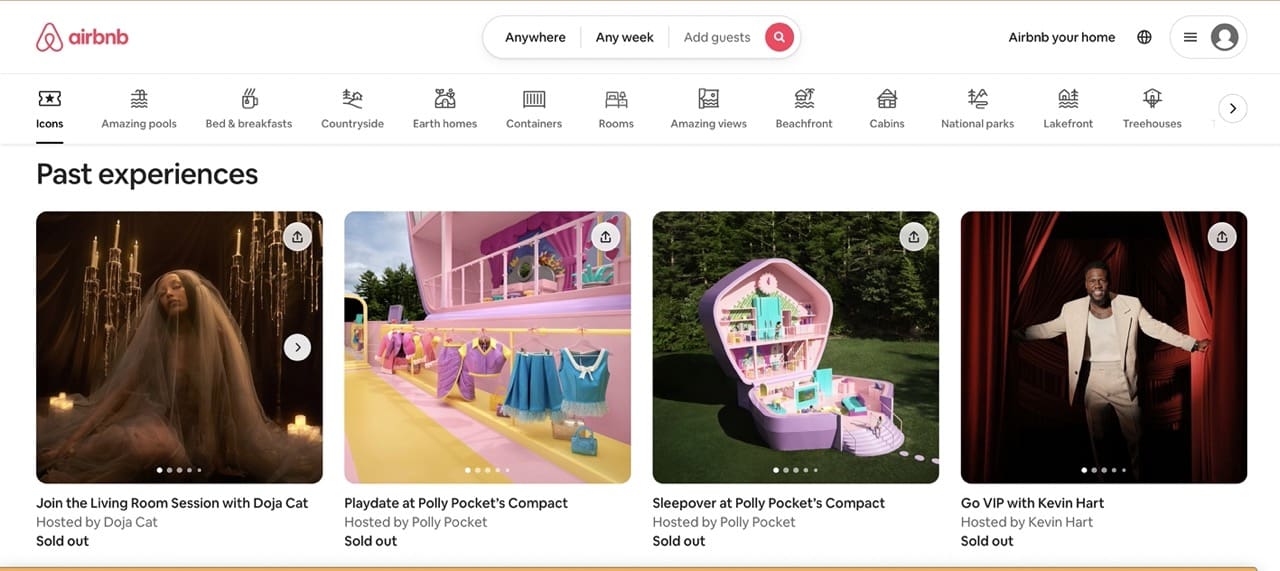
To understand how much of your rental income you keep, it helps to look at how each platform charges its fees.
Airbnb’s current fee structure uses a single-fee model for most hosts in Dubai.
Most hosts pay a 15.5% fee, which is deducted from the host payout. The guest does not see a separate Airbnb service fee added to the booking under this structure.
For example, if your booking subtotal is $200:
Your actual earnings will still depend on other costs associated with the property, such as cleaning, maintenance, taxes and management fees.
Booking.com uses a commission-based model, with rates typically ranging from around 10% to 25%. The exact commission depends on the property’s agreement and whether it participates in additional programmes designed to increase visibility.
So, if a property has a 15% commission and receives a $200 booking:
The important thing is that these examples are illustrative, not a direct earnings comparison.
Your Booking.com commission may differ from 15%, just as your Airbnb setup may differ depending on the property and applicable fee structure.
There isn’t one answer for every property.
Airbnb’s 15.5% host fee gives you a straightforward benchmark, while Booking.com’s 10%–25% commission range means your actual cost can fall below or above Airbnb’s rate.
Additionally. the platform with the lower fee isn’t automatically the platform that makes you more money.
Booking volume, nightly rates, cancellation patterns and the type of guests each channel brings all affect your final revenue.
At Homevy, we manage properties across multiple booking platforms rather than relying on one channel. That means we look at the actual revenue and costs each channel generates for a property, not just the headline commission.
Want to estimate your potential rental income? Try Homevy’s Airbnb Income Calculator.
Airbnb generally provides stronger and more consistent protection for hosts through its AirCover for Hosts program, which includes $3 million in host liability insurance and $1 million in damage protection. While Booking.com also offers security measures and insurance options, its coverage often varies by region, meaning hosts may need additional protection depending on their location.
Airbnb’s AirCover for Hosts is designed to protect hosts from property damage, liability claims, and certain booking issues.
Key protections include:
Airbnb also notes that Host damage protection isn’t an insurance policy, and both damage protection and liability insurance have terms, conditions and exclusions.
Booking.com currently provides eligible home-like properties with Partner Liability Insurance of up to $1 million per reservation.
It’s available for third-party liability claims, including certain claims involving bodily injury or property damage to guests or other third parties.
The programme applies to eligible Booking.com stays during the 2026 policy period and comes at no additional charge.
Unfortunately, the Partner Liability Insurance does not cover damage to the host’s own property or contents.
It really comes down to what you’re trying to protect.
Airbnb gives hosts built-in protection for certain property damage and liability claims, while Booking.com’s Partner Liability Insurance focuses on third-party liability for eligible stays. So, comparing the two by headline coverage alone doesn’t tell the whole story.
And here’s the AED 1 million advice we’d tell any Dubai host: don’t let a platform’s protection become your entire risk-management plan.
Your apartment, your furniture and your liability still need proper attention outside the booking platform.
At Homevy, we look at the whole picture when managing a property. The goal isn’t just to have protection when something goes wrong. It’s to have the systems, inspections and processes that help prevent things from going wrong in the first place.
Both platforms generate strong booking demand, but in different ways. Airbnb often achieves higher nightly rates for properties, while Booking.com delivers more consistent booking volume due to its global hotel-style search audience.
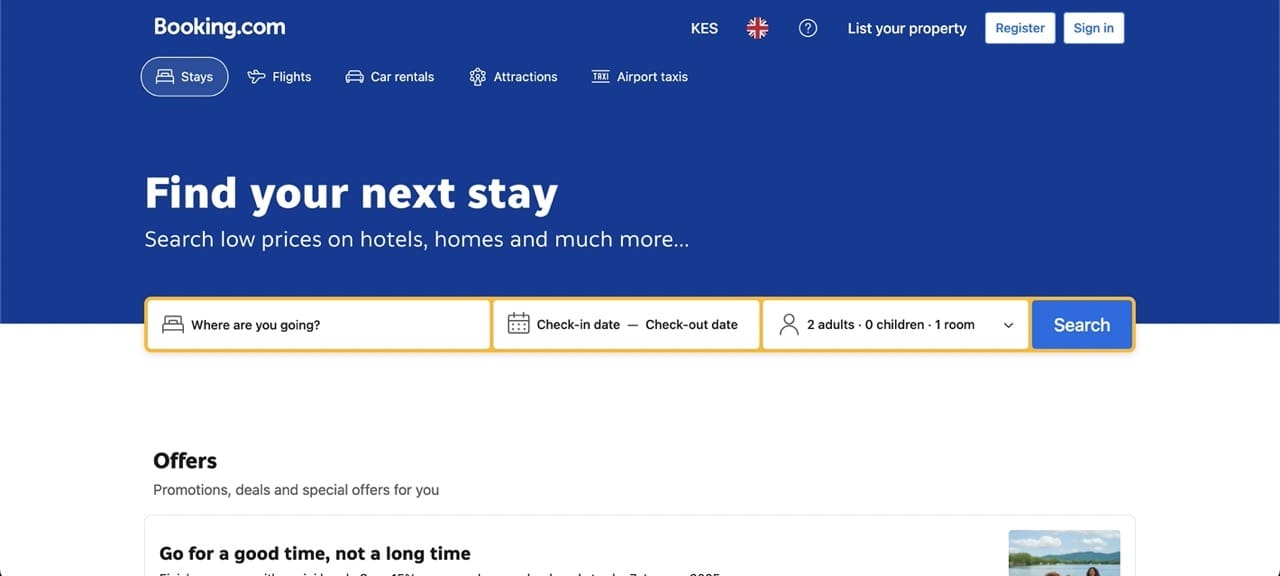
Airbnb’s Revenue Generation Features:
At Homevy, we take full advantage of Airbnb’s dynamic pricing integrations through our custom-built pricing software, which adjusts nightly rates based on market demand, seasonality, and travel trends, helping homeowners consistently maximize their ROI.
Booking.com’s Revenue Drivers:
However, short-term rental properties listed on both platforms see an average 15-25% increase in overall bookings. This means the real question isn’t “Airbnb vs Booking.com” but rather “how to optimize your presence on both platforms.”
Hosts should list on Airbnb or Booking as they help spread revenue across multiple platforms, reduce business risk, maintain bookings during different travel seasons, and attract a broader mix of guests.

Photo by Tima Miroshnichenko
Listing your property on both Airbnb and Booking.com isn’t just smart, it’s profitable. Properties on multiple platforms often earn 15–25% more each year. Think of it like having two shops in busy areas instead of one; each brings in its own set of guests and bookings.
If you’re curious about how much your property could earn, check out Homevy’s STR vs LTR Profit Calculator and get a clear picture of your potential revenue.
Hosting on Booking.com and Airbnb provides a safety net for your business. If one platform experiences a downturn or technical issues, you’ll still have bookings flowing through the other. Think of it as not putting all your eggs in one basket.
Different vacation rental platforms shine in different seasons. Airbnb might dominate during holiday periods and weekends, while Booking.com often performs better during all-around travel seasons. A combined presence on both platforms increases your occupancy rate.
Each vacation rental platform reaches distinct audience segments. By listing on both Booking.com and Airbnb, you’re essentially doubling your market exposure.
To succeed on both Airbnb and Booking.com, hosts need three essentials: professional photography, compelling property descriptions, and smart listing optimization. At Homevy, we apply all three to maximize bookings and ROI for every property we manage.
1. Use Professional Photography
High-quality images can significantly boost booking rates. At Homevy, we use professional Airbnb photography across all listings. If you’re a DIY host, check out this guide on the best cameras for Airbnb.
Bright, well-lit spaces, multiple angles, and lifestyle shots help your property stand out.

Photo by cottonbro studio
2. Create Vivid Descriptions
At Homevy, one of the key factors that drives high-quality bookings is well-written listing descriptions. Our copywriting team crafts optimized, compelling listings across multiple booking platforms to make each rental stand out and attract the right guests.
3. Do SEO
Optimized listings get more visibility. Homevy ensures that all descriptions include relevant keywords, clear headlines, and structured information so properties rank higher in search results across both Airbnb and Booking.com.
Thanks to these strategies, Homevy properties consistently see higher occupancy and revenue than average listings in Dubai.
Airbnb gives hosts several cancellation policy options, allowing them to choose terms that suit their property and stay type.
Booking.com also lets properties set different cancellation conditions, including flexible and non-refundable options. The key difference is how each platform structures refunds, cancellation windows and the host’s payout when a guest cancels.
Both Airbnb and Booking.com can give new listings exposure, but visibility depends on factors such as pricing, availability, listing quality, guest demand and search ranking.
Airbnb says new listings are usually visible in search within 24 hours after being published, although it can take up to 72 hours.
Yes. You can adjust your pricing on Airbnb and Booking.com based on each platform’s fees, guest demand and booking patterns.
However, keep your overall pricing strategy consistent enough that major differences don’t create unnecessary guest confusion. If you manage both channels, use a channel manager or property management system to keep rates and availability organised.
Airbnb typically releases host payouts around 24 hours after guest check-in, although timing can vary for new hosts, longer stays, payment methods and other circumstances.
Booking.com’s payout timing depends on the property’s payment setup, location and payment method, so hosts should check the specific terms attached to their account rather than assume a fixed payout schedule.
Not necessarily. Airbnb is particularly well known for homes, apartments and distinctive stays, while Booking.com covers a broader range of accommodation types, including hotels, apartments and holiday homes.
Which platform performs better depends on your property, target guests, pricing and booking patterns.
There isn’t one platform that is better for every vacation rental.
Airbnb and Booking.com attract different types of guests and have different fee, cancellation and payment structures.
For many professional hosts, listing on both or more platforms can create more opportunities, provided pricing, calendars and guest management are properly coordinated.
If your goal is to get more from your Dubai short-term rental, the answer doesn’t have to be Airbnb or Booking.com.
It could be both, or more.
In the past two years at Homevy, we’ve managed properties across 10,000+ guest nights, our portfolio has a 4.9-star average rating and Airbnb Superhost status.
In 2026, Homevy was named Best Short-Term Rental Management Company in Dubai at the Arabian Best of the Best Awards.
While it is a nice little addition to the trophy shelf, it reflects the intentionality that goes into marketing across multiple booking platforms and beyond them. Plus keep every guest for each property we manage satisfied.
So, if you’re happy managing your property yourself, keep going.
But if you want to spend less time dealing with bookings, marketing and coordinating guests, Homevy can help.
Spend more time benefiting from your investment, talk to Homevy about managing your property.

Thank you for reading! I'm excited to help homeowners and guests alike discover the benefits of short-term rentals with HOMEVY. Stay tuned for more updates and helpful tips on the blog.



Get access to our 5-day training course on managing your vacation rental property in Dubai.
Download Guide