

Learn How To Manage Your Rental Property on Airbnb
Get access to our 5-day training course on managing your vacation rental property in Dubai.
Download GuideA holiday home license in Dubai is different from a permit.
The licence authorises you to operate a holiday home. The permit approves the specific apartment or villa you want to rent to guests.
Homevy is a DET-licensed holiday home operator in Dubai. We’ve spent more than two years managing holiday homes for property owners and handling permits, renewals and appeals for the properties we manage.
That experience means we understand where the licence and permit process can get confusing for property owners.
In this guide, we’ll explain the difference between a Dubai holiday home license vs permit, who holds them when you hire a management company, what they cost in 2026, and what you need to get your property legally up and running.
A holiday home licence authorises a person or company to operate vacation homes in Dubai. A holiday home permit approves a specific furnished apartment or villa for short-term rental.
Photo by Ekrulila
You need one licence for the owner or operator, plus one permit for every unit you rent out.
Each permitted unit also gets a Standard or Deluxe classification, which determines the furnishing standards it must meet.
| Description | Holiday home licence | Holiday home permit | Classification |
| What it covers | You or your company | One apartment or villa | One apartment or villa |
| How many you need | One per owner or operator | One per unit | One per unit |
| How you get it | Register on DET’s Holiday Homes system as an owner, or through DET licensing as a company | Add the unit to the Holiday Homes system | Self-classify after the permit is approved |
| Validity | Ongoing while your registration stays current | Up to one year | While the unit meets the standards |
| Shown to guests | Licensee details displayed in the unit | Permit number on every listing and QR code by the door | Category shown in the unit |
So, if you own three apartments, you’d have one licence and three permits.
But, you’ll still hear both called “DTCM” documents. This is because DET took over from DTCM in 2021, which is why the old name still appears in searches and everyday conversations.
The right licence depends on who owns the property and who operates it.
If you manage up to eight units you own yourself, you can register as a Home Owner and hold the licence yourself.
If you hire a licensed property management company like Homevy, the company holds the licence and manages the permits for your units.
Within Homevy’s property management service, the company can also take care of the day-to-day running of your property, including guest check-ins and check-outs, while working to maximise its rental income.
Photo by Homevy
Either way, every holiday home unit needs its own permit.
| Your situation | Who holds the licence | Who holds the permit |
| You own one apartment and manage it yourself | You, as a registered Home Owner | You |
| You own two to eight units and manage them yourself | You, under the same registration | You, one permit per unit |
| You own more than eight units | A company licence or licensed operator for the extra units | Whoever holds the licence for each unit |
| You hire a management company | The management company | The management company, with your authorisation |
| The property is owned by a company | The company or a licensed operator | Issued with the company’s documents |
If you manage your own units, keep these three rules in mind:
If you’re renting a property rather than owning it, the rules are different. See our guides to Airbnb arbitrage and legalities in running Airbnb in Dubai.
When you hand your property to a licensed holiday home company, the permit for your unit is issued under the company’s licence.
You sign DET’s owner authorisation form, and the permit dates follow your agreement with the company.
That has a few practical effects:
At Homevy, we’ve managed more than 10,000 guest booked nights across Dubai holiday homes and maintained Airbnb Superhost status.
We’ve spent more than two years managing properties in Dubai, so we understand what happens after the permit is approved too.
That means you’re not simply handing over the paperwork. You’re handing over the day-to-day operation, from getting guests checked in to keeping the property performing well.
So before you sign a management agreement, make sure it spells out when you can use your property, who handles compliance, what services are included and how the property will be managed.
The licence comes first when you register as a Home Owner. The permit comes next when you add your property.
Both applications happen through DET’s Holiday Homes system, which is why the two can easily feel like one process.
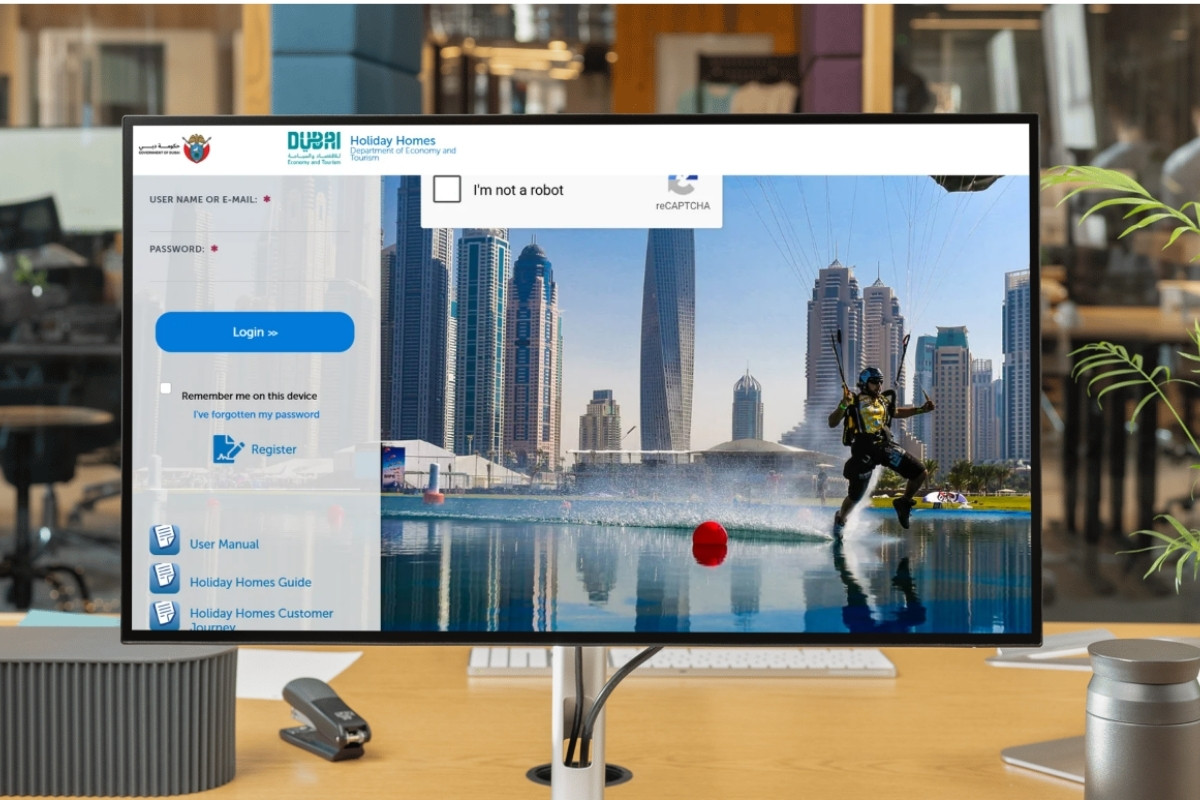
Photo by Homevy
Here’s the process if you’re managing your own property:
Need help with the documents, screens and common mistakes? See our step-by-step guide to getting a DTCM holiday home permit
Under DET’s standard fees, registering on the Holiday Homes system costs AED 1,520 once.
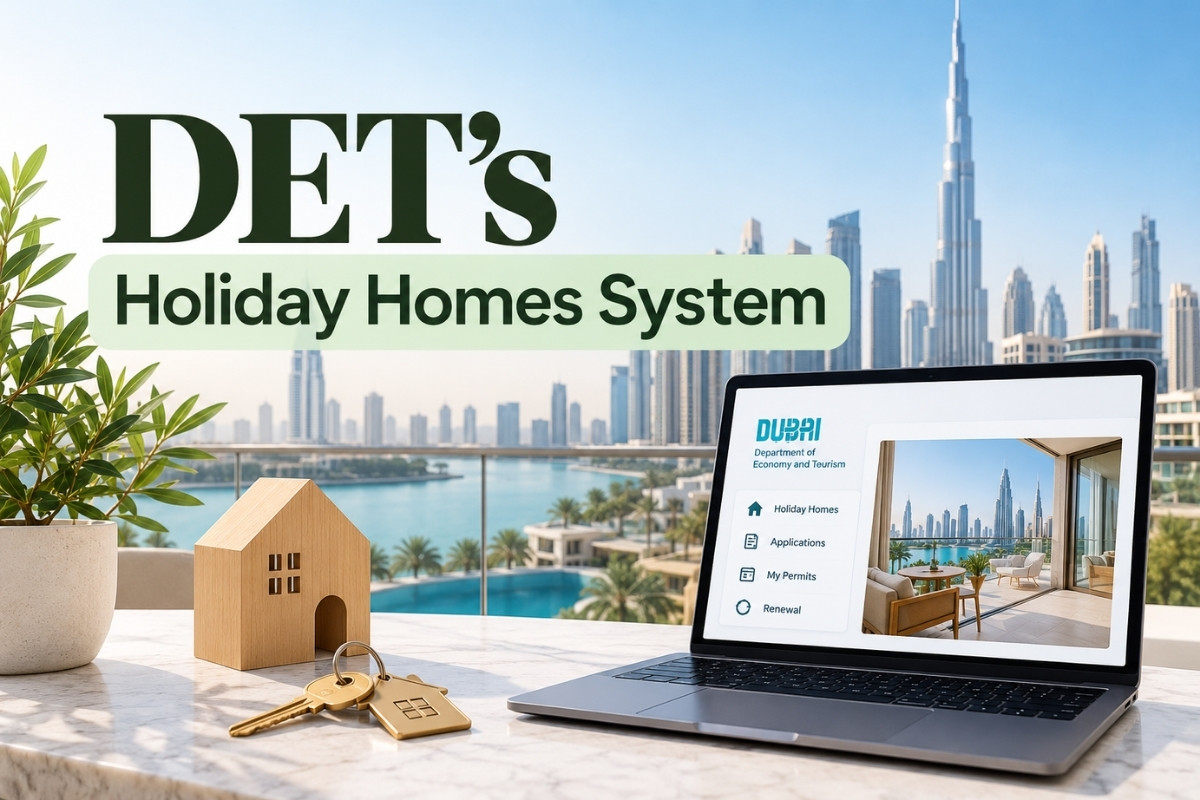
Photo by Homevy
Each permit then costs AED 370 a year for a studio or one-bedroom unit, plus AED 300 for every additional bedroom, up to AED 1,270 per unit.
The two fees work differently, which is where budgeting can get confusing:
| Fee | What it pays for | Amount | How often |
| Holiday Homes registration | Your account and licence | AED 1,520 | Once. DET says no renewal fee applies |
| Permit, studio or 1-bedroom | One unit | AED 370 | Every year, per unit |
| Permit, each additional bedroom | One unit | AED 300 | Every year, per unit |
| Permit maximum | One unit | AED 1,270 | Every year, per unit |
For example, a two-bedroom apartment would normally cost AED 1,520 for registration plus AED 670 for the permit in the first year.
After that, you would pay AED 670 each year to renew the permit.
Add a second two-bedroom unit and you pay another AED 670 for its permit. You don’t pay the AED 1,520 registration fee again.
The DET licence and permit aren’t the only costs involved in getting a holiday home ready for guests. You’ll also need to consider:
Want to know whether your property could actually make money as a holiday home? Run the numbers through our Airbnb income calculator.
The licence and permit run on different cycles. Your Home Owner registration doesn’t have a renewal fee, but each permit must be renewed every year.
Here’s what to keep on top of:
Homevy Tip: Set a reminder 45 days before each permit expires. That gives you two weeks to check your documents before the renewal window opens.
If you don’t want to worry about the hassle of managing your property alone, or keeping up with permit renewals, speak to Homevy about managing your property.
Homevy is a DET-licensed holiday home operator. When you hand us your property, the license side is already taken care of, and we handle the permit for your unit(s).
Photo by Homevy
Our process covers:
That’s the difference between getting a permit and keeping your holiday home compliant throughout the year.
And we’re not managing permits in isolation.
Homevy has managed achieved a 4.9-star average guest rating across our portfolio.
Our properties have also averaged around 91.1% occupancy, showing that compliance is only one part of the job. The property still needs to perform.
It’s also why the Arabian Best of the Best Awards named Homevy the Best Short-Term Rental Management Company in Dubai for 2026.
You get the compliance handled, while we manage the property with the goal of keeping it occupied, profitable and guest-ready.
No. If you own the property and manage it yourself, you register as a Home Owner on DET’s Holiday Homes system with your Emirates ID.
A trade licence is only needed if you set up a company, manage other people’s properties or run more than eight units.
No. Under DET’s standard fees, the AED 1,520 Holiday Homes registration is a one-off payment, and DET says no renewal fee applies.
Your permits are the recurring cost, renewed every year for each unit.
Individual owners can hold up to eight permits at once. For a ninth unit, you’ll need a company licence, or you can hand the extra units to a licensed holiday home operator.
Only if your agreement allows it. DET’s guidance says the owner can’t use the unit during the permit period unless this has been agreed with the licence holder, so set out any personal-use dates in your contract.
Yes. DTCM was Dubai’s former tourism authority, and its holiday home responsibilities moved to DET in 2021. “DTCM licence” and “DTCM permit” are still common names for the same DET documents.
Getting your holiday home license in Dubai or a permit is one thing. Keeping it compliant is another.
A missed renewal, incorrect listing, maintenance issue or Tourism Dirham mistake can lead to DTCM fines ranging from AED 200 to AED 20,000, with repeat violations potentially reaching AED 100,000.
At Homevy, we’ve managed more than 10,000 guest booked nights across Dubai holiday homes and maintained Airbnb Superhost status.
We handle the compliance and day-to-day operation for every property we manage, from permits and renewals to guest check-ins, inspections and Tourism Dirham requirements.
You shouldn’t have to choose between enjoying your property and earning from it. Talk to Homevy about managing both.


Get access to our 5-day training course on managing your vacation rental property in Dubai.
Download Guide