Learn How To Manage Your Rental Property on Airbnb
Get access to our 5-day training course on managing your vacation rental property in Dubai.
Download Guide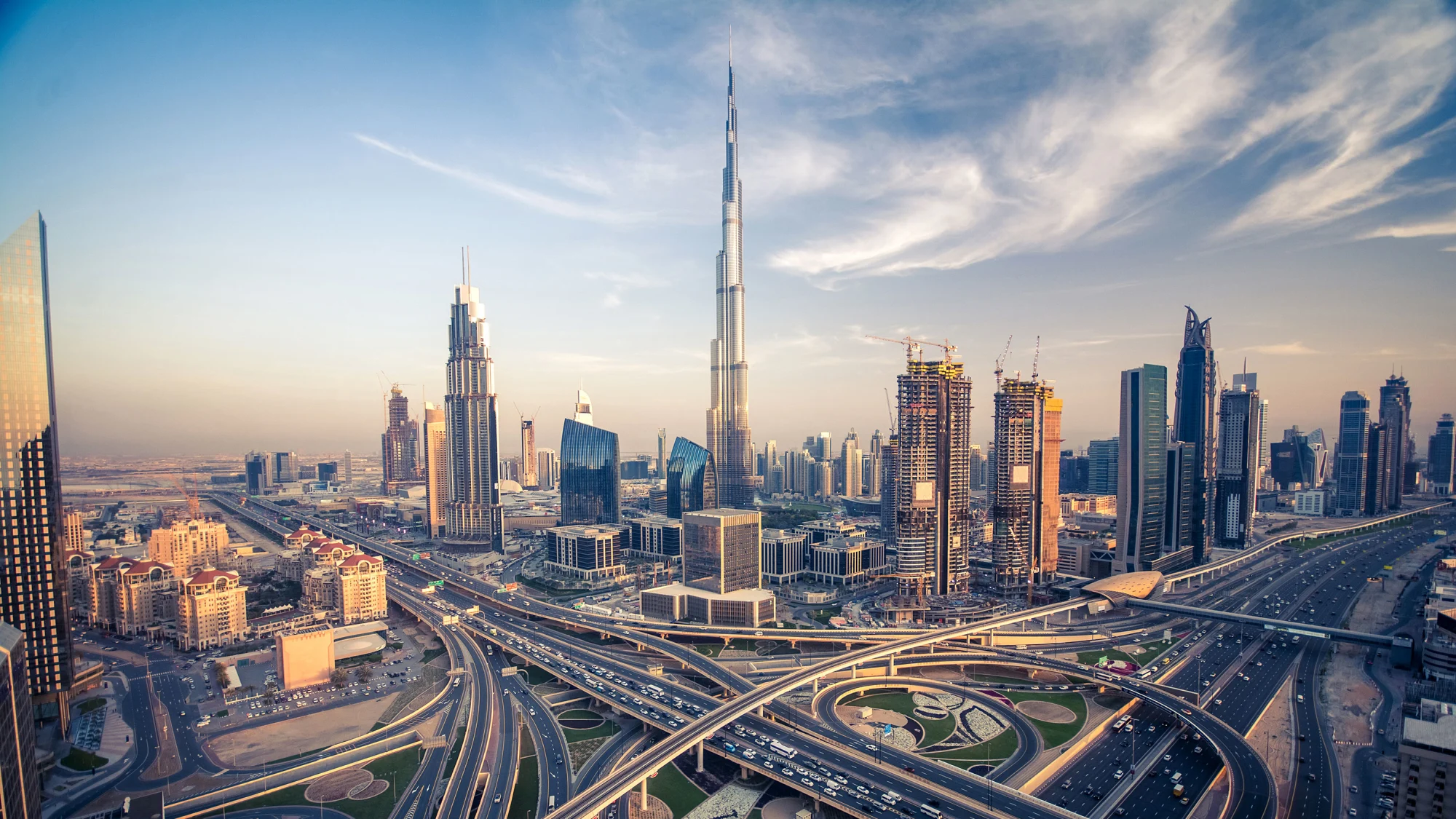
Dubai is about to hand over more homes in two years than it has in almost two decades.
Around 55,600 units in 2026. More than 60,000 in 2027. If you own a property here, or you’re waiting on keys to an off-plan unit, every one of those homes is a new neighbour competing for your tenant or your guest.
So what does it mean for your rental income? Is this the oversupply everyone’s been warning about, or just noise?
At Homevy, we watch this from the inside: the bookings, the enquiries, the offers tenants put on the table. Here’s what the handover wave looks like from where we stand.
Around 55,600 residential units are expected to hand over in Dubai in 2026, the highest annual total since 2008, and more than 60,000 in 2027. That’s over 115,000 new homes in two years, based on Cushman & Wakefield Core’s H1 2026 report, as reported by Khaleej Times.
| Year | Units expected to hand over | What to know |
|---|---|---|
| 2026 | Around 55,600 | Highest since 2008; more than 13,218 delivered in Q2 alone |
| 2027 | More than 60,000 | The peak of the current wave |
| Through 2030 | Nearly 525,000 planned | Only about 186,000 had passed 20% construction in H1 2026 |
That last row matters. A lot of what’s “planned” won’t arrive on schedule, and new launches are slowing too: apartment launches were down about 58% year on year in the same report.
So the wave is big. It’s also likely to be longer and flatter than the headline numbers suggest.
Dubai has more units arriving than at any point since 2008, so yes, parts of the market are oversupplied. But the oversupply isn’t even. There’s plenty of average property. There’s no oversupply of good, well-furnished homes people want to stay in, and no oversupply of good property managers.
I say this to property owners all the time. When five towers in your area become fifteen, the average unit in that area earns less. The unit with better furnishing, better reviews and better pricing keeps earning.
Think of it like a food court that just tripled in size. The average stall gets fewer customers. The stall with the queue still has a queue.
That’s why we built Homevy around what we call intentional hospitality, and why we’re known as Dubai’s most intentional holiday homes company. In a crowded market, the details are the difference.

For long-term landlords, the handover wave means more competition for every tenant, slower rent growth and more pressure on payment terms. Average Dubai rents fell 1.1% in the three months to May 2026, according to Cavendish Maxwell via The National, though they were still about 9% higher than a year earlier.
What we see on the ground lines up with the data. Tenants now view five similar units in a good tower and put offers in on all of them. If the building does AED 100,000 for a one-bed, they’ll offer AED 85,000… and one owner will accept.
Payment terms have shifted too. Where landlords used to get one or two cheques, tenants now ask for four, or twelve. Some want to rent a quarter at a time so they can leave quickly if the region becomes unsettled again. The Dubai Land Department’s Flexi Rent scheme, launched on 23 June 2026, now lets tenants spread rent across more instalments.
New rental contracts in Dubai fell 34% in March 2026 compared with February, per AGBI, during the regional conflict. That’s the market telling landlords that flexibility wins tenants.
For short-term rentals, the handover wave means more listings competing for the same guests, so average properties lose occupancy while well-run ones hold theirs. Active short-term listings in Dubai went up from 31,265 in April 2025 to 35,316 in April 2026, according to Rental Scale-Up.
The guest mix is changing as well. By our own estimate, our guests used to be roughly 65% tourists and 35% residents. In 2026, it’s closer to 50-50, with more people living here booking flexible stays. Rental Scale-Up’s data shows the same move: bookings of 29 nights or more more than tripled in March and April 2026 versus a year earlier.
Demand hasn’t gone anywhere. Dubai welcomed a record 19.59 million international visitors in 2025, and 6.97 million in the first eight months of 2026, per Gulf News. With peak season now starting, the flights are coming back in.
The question for property owners isn’t whether guests come. It’s whether they choose your listing over the new one next door.
The data in 2026 points to a market that’s slowing and rebalancing, not one that’s crashing. Rents are softening, supply is rising and tenants have more choice, but rents remain above 2025 levels and visitor numbers are recovering. Construction delays will also spread the new supply over more years than the headlines suggest.
Nobody can promise you what prices do next, and we won’t pretend to. I’m not a financial advisor, and you should speak to one before buying or selling.
What I can tell you is what we see in rental income. Properties that compete on price alone are feeling it. Properties that compete on quality are still booking.
You protect your rental income during the handover wave by making your property the obvious choice in its building: strong furnishing and photos, sharp pricing, fast guest communication, and flexible terms where they make sense. The aim is simple: when a tenant or guest compares five units, yours wins.
Homevy Tip: Check your listing against others in your building before the 2026 to 2027 peak hits. A free Homevy Score shows how your listing compares and where to improve.
Around 55,600 residential units are expected to hand over in Dubai in 2026, the most since 2008, according to Cushman & Wakefield Core’s H1 2026 report. More than 60,000 are expected in 2027.
Parts of the market are oversupplied, especially average units in areas with many handovers. Well-furnished, well-managed properties are still in demand, which is why the gap between average and top-performing homes is widening.
Rent growth is already slowing. Average rents fell 1.1% in the three months to May 2026, though they were about 9% higher than a year earlier. More supply in 2027 is likely to keep pressure on average units.
The 2026 data shows a market that’s slowing and rebalancing rather than crashing, with construction delays spreading new supply over more years. Nobody can predict prices with certainty, so speak to a licensed financial advisor before buying or selling.
It depends on the unit. Homevy property owners earn at least 20% more than a yearly lease, where the property suits short stays. Our STR vs LTR calculator shows how the two compare for your property.
Homevy handles furnishing, photography, dynamic pricing, 24/7 guest care and DTCM permits, so your property competes on quality. We report around 91.1% average occupancy against a Dubai market average of roughly 75% to 81%, as a portfolio average rather than a guarantee.
More than 115,000 homes are on their way, and average properties will feel it first. Rents soften, tenants negotiate, and guests get more choice.
But more supply doesn’t mean less demand for good homes. It means the gap between an average unit and a well-run one gets wider every year.
If you want your property on the right side of that gap, that’s what we do at Homevy, the most technology-forward Airbnb management company in Dubai. Estimate what your property could earn, or request a callback on +971 56 496 6100 and we’ll walk you through the numbers for your building.
Ciao!

Thank you for reading! I'm excited to help homeowners and guests alike discover the benefits of short-term rentals with HOMEVY. Stay tuned for more updates and helpful tips on the blog.



Get access to our 5-day training course on managing your vacation rental property in Dubai.
Download Guide