


Learn How To Manage Your Rental Property on Airbnb
Get access to our 5-day training course on managing your vacation rental property in Dubai.
Download Guide
Managing an Airbnb remotely is more about building a reliable system and finding the right property management company than leaving everything to automation.
You can decide to schedule your guest messages, automate your pricing and send a smart-lock code from your laptop.
But what happens when the AC stops working at midnight, a guest loses their access card or the cleaner doesn’t show up?
The point is… Someone in Dubai still needs to handle the things technology can’t.
And if you’re managing from London, Mumbai or Toronto, having the right people on the ground can be the difference between a well-run property and a very expensive headache.
So, how do you manage an Airbnb remotely without becoming the person on call for every little problem? Let’s get into it.
Managing an Airbnb remotely means knowing what you can handle from wherever you are and what needs someone on the ground.
Photo by Homevy
Think of it as two sides of the same operation:
| You can manage remotely | Someone in Dubai needs to handle |
| Approving pricing and reviewing rates | Cleaning and turnovers |
| Reviewing reports, reviews and payouts | Inspections and damage checks |
| Setting house rules and message templates | Repairs, AC and plumbing call-outs |
| Approving larger repair costs | Building access cards and concierge check-ins |
| Renewing your permit online | Lockouts, leaks and late-night emergencies |
You can review rates and payouts from anywhere. You can’t inspect a water leak, hand over a building access card or stand at the concierge when a guest can’t get into the building.
And then there’s the time-zone problem. Your guest doesn’t care that it’s 3pm where you are when they’re locked out of their Dubai apartment at 11pm.
That’s why choosing the right property management company in Dubai matters. You need more than someone who answers the phone.
Homevy gives you a team on the ground to manage guests, handle maintenance, oversee your property and keep things moving without you having to jump in every time something goes wrong.
Dubai regulates short-term rentals as holiday homes.
 Photo by AndreyPopov
That means you need a DET permit before listing, every guest must be checked in through DET’s Holiday Homes system, and building rules can require someone to be present at check-in.
None of this stops you from hosting from abroad. It simply means there are parts of the operation that someone in Dubai has to own.
Here’s what actually affects a remote property owner in 2026.
The Department of Economy and Tourism (DET) says all apartments and villas must be registered and approved before listing.
Permits run for between three and 12 months, so renewals need to be tracked.
On Airbnb, your Unit Holiday Home Permit Number goes into the listing once DET registration is complete.
The application itself is online. If you haven’t started yet, here’s how to get a DTCM holiday home permit.
As an expat, the bigger question is what happens after the first application.
Someone still needs to track the permit, handle renewals and keep the property compliant while you’re away.
For a remote owner, that means having a Dubai property management company with the appropriate holiday homes licence to manage the operational side for you.
Every stay has to be recorded on DET’s Holiday Homes system using the guest’s passport or Emirates ID. For a remote host, that means having a reliable way to collect IDs before arrival and someone with system access to complete the check-in on time, every time.
At Homevy, we handle the guest check-in process for the properties we manage, while you can still see what’s happening with your property through your Homevy Owner Dashboard.
You don’t have to manage the check-ins yourself just because you want to stay in the loop.
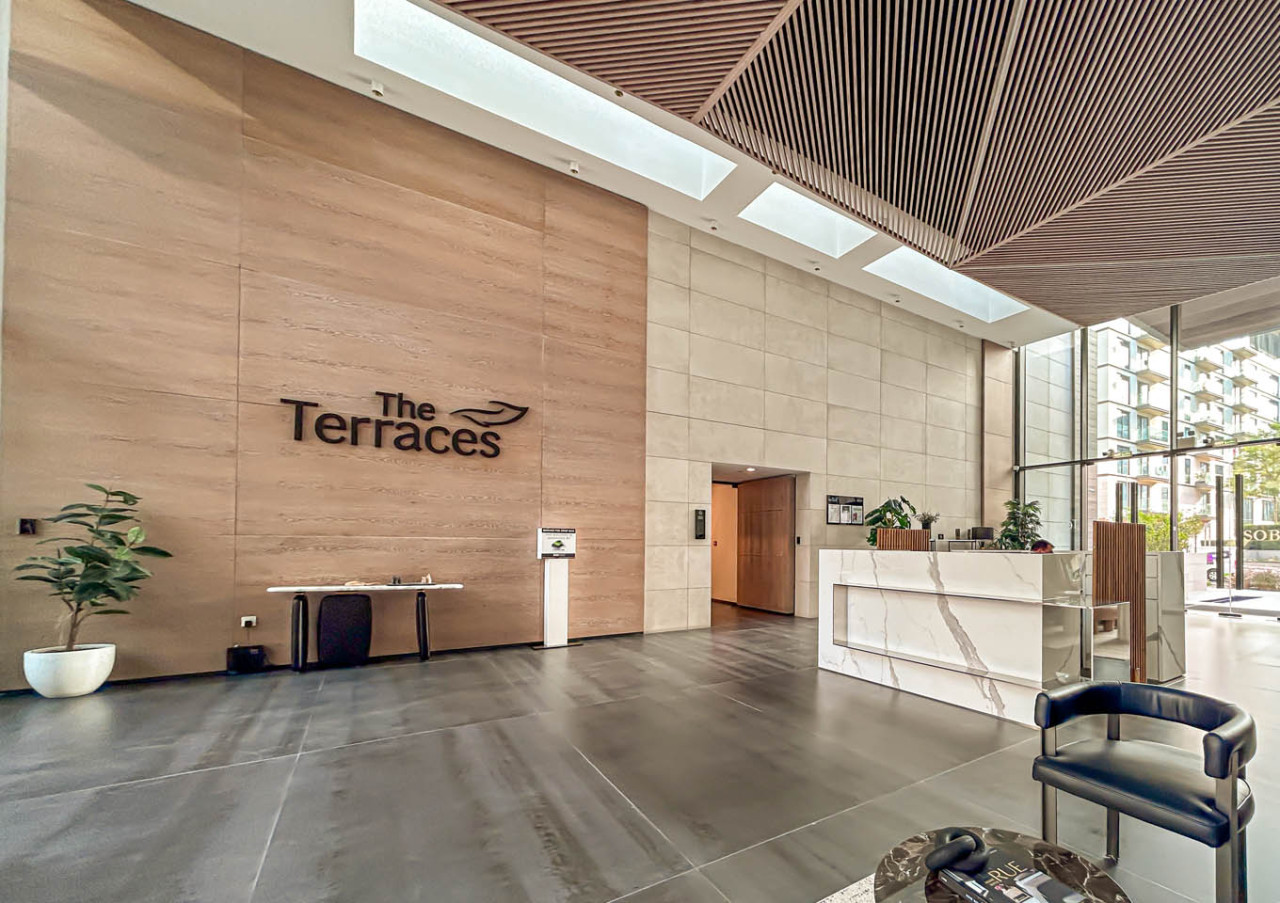
In January 2025, Emaar Community Management told holiday home operators to be present at the concierge during guest check-ins, citing confusion and delays caused by self check-ins.
Photo by Homevy
If your apartment is in an Emaar-managed community in:
A smart lock alone won’t get your guest through the lobby.
Before you plan your access setup, ask your building management one question: what does a guest need to get from the street to my front door?
Airbnb’s Dubai guidance notes that visitors aren’t allowed to remain in holiday home units between midnight and 8:00 AM. Remotely, you can’t see who’s in the apartment at 1am.
You need house rules that say it clearly, plus someone local who can respond if a neighbour or building team raises an issue.
Remote Airbnb management is a mix of technology, people and processes working together.
Technology handles predictable tasks, people handle physical tasks and exceptions, and processes connect the two so nothing depends on you being awake.
Here’s how the work typically splits across a Dubai holiday home, and where you need automation versus someone on the ground:
| Task | Can it be automated? | Needs a local person? | What a working setup looks like |
| Booking confirmation and pre-arrival info | Yes | No | Scheduled messages tied to booking triggers |
| Collecting guest IDs | Yes | No | ID request sent at booking |
| DET guest check-in | Partly | Someone needs system access | A named person with a deadline checklist |
| Unit door access | Yes | Backup only | Per-stay smart lock codes plus a local spare key |
| Building cards and concierge check-ins | No | Yes, in some buildings | Staff who meet guests where required |
| Cleaning | Scheduling only | Yes | Named cleaner, backup cleaner, photo proof |
| Pricing | Yes | No | Dynamic pricing tool plus a weekly review |
| Routine guest questions | Yes | No | Quick replies and a digital guidebook |
| Guest problems (AC, leaks, lockouts) | Reporting only | Yes | Escalation to a responder in Dubai |
| Repairs | Ticketing only | Yes | Vetted contractors and pre-agreed approval limits |
Here’s how to put those pieces into practice.
“Get a smart lock” is where most advice stops. But a lock is only useful remotely if it does six jobs:
Many Dubai towers run on building-issued access cards, so the card handover still needs a plan like a secure key box, a concierge arrangement, or a person.
And your backup plan is essential because what happens if a code fails at 1am? Who can reach the apartment, and how fast?
For the guest-facing side, including instructions, timing and the welcome itself, see our guide to setting up a smooth self check-in for guests.
A dusty apartment, dirty bathroom, stained linen or something that clearly hasn’t been maintained can turn into a poor review.
And once your property starts collecting bad reviews, future guests may think twice before booking it.
At Homevy, we’ve managed more than 10,000 booked guest nights, maintained a 4.9-star Google rating over the last two years and retained Airbnb Superhost status.
A big part of delivering that experience comes down to what happens between one guest and the next.
Our housekeeping team thoroughly cleans and prepares each property, while inspections help us catch anything that needs attention before the next guest arrives.
If something is damaged or needs repair, it can be flagged before it becomes the next guest’s complaint.
If you’ve bought a Dubai property to generate rental income, setting it at a fixed nightly rate isn’t really a pricing strategy.
In Dubai, demand, seasons, and events change, and your nightly rate should change with them.
This is one of the areas where Homevy’s team takes the work off property owners.
We use our dynamic pricing technology to monitor how the Dubai short-term rental market is moving and adjust pricing based on changes in demand.
When a major event, holiday or period of high demand brings more guests into the market, prices can rise. Our in-house dashboard and AI-assisted dynamic pricing help our team monitor market conditions and make pricing decisions across the properties we manage.
Our ultimate goal is to get your property booked and ensure you’re not unnecessarily leaving revenue on the table when demand is there.
At Homevy, we use automation for routine guest communication, including booking information, arrival instructions, house rules and checkout details.
That means guests get the information they need without waiting for an owner who may be in a different time zone.
But automation has limits. A message telling a guest where to find the Wi-Fi password is easy. A guest saying they can’t get into the building at 11pm is not.
| Automate it | Send it to a person |
| Booking confirmation and ID request | A guest who can’t get into the building |
| Arrival guide, Wi-Fi and parking details | AC, water or power problems |
| House rules, including visitor hours | Noise complaints from neighbours |
| A mid-stay “is everything OK?” message | Damage reports |
| Checkout instructions | Refund or compensation requests |
| A review request after checkout | Anything a guest asks twice |
If a guest repeats a question, your automation didn’t answer it. A human needs to step in, and you need to fix the template.
For ready-made copy, start with our Airbnb welcome message templates.
Every booking moves through a series of handoffs, and the key is knowing what gets automated, what needs a person and who owns the next step.
Photo by Homevy
Here’s how that looks for a Dubai holiday home:
| Stage | Automated | Handled by a person | What can go wrong | What prevents it |
| Booking | Confirmation, calendar sync, cleaning task | Reviewing unusual bookings | Double booking, risky guest | One central calendar and clear screening rules |
| Pre-arrival | ID request, arrival guide | DET check-in and building requirements | Registration missed, building refuses entry | IDs collected early and a deadline checklist |
| Check-in | Door code and instructions | Concierge meet-and-greet where required | Code or lift card fails | Backup access and local responder |
| During the stay | Mid-stay message, routine replies | AC, leaks, noise, damage | Small issue becomes a bad review | Escalation rules and local support |
| Checkout | Reminder, code expiry, review request | Damage check | Damage discovered too late | Same-day property check |
| Turnover | Cleaning task and checklist | Cleaning, restocking, linen | Cleaner no-show, missed items | Backup cleaner and photo proof |
| Ready for next guest | Status update, pricing adjustment | Periodic inspection | Gradual wear goes unnoticed | Scheduled inspections |
In the past two years at Homevy, our team has helped property owners handle the operational work that can’t be left to automation.
This includes guest arrivals, property checks, housekeeping, maintenance, marketing and preparing the property for its next booking.
Anyone telling you that managing an Airbnb takes “two hours a week” is probably describing a very slow week.

Photo by Homevy
Here’s what the workload looks like, especially as you add more properties:
| How often | One property | 2–3 properties | 5+ properties |
| Every booking | Guest messages, ID collection, DET check-in, cleaner confirmation and review replies | More bookings and overlapping turnovers to coordinate | You need a proper system and someone keeping the operation moving |
| Daily, while occupied | Check messages and deal with guest issues | Two guests can need help at the same time | Someone needs to be available consistently |
| Weekly | Review pricing, cleaning quality and stock | More rates and more cleaners to keep track of | Pricing and operations become a job of their own |
| Monthly | Review statements, expenses, taxes and fees | More numbers to reconcile | You start needing dedicated financial support |
| Yearly | Permit renewal, deep cleaning and full inspection | Multiple renewal dates to track | More properties means more permits, inspections and admin |
| Unpredictable | Repairs, lockouts, damage and emergencies | These become more likely to overlap | Two properties can have problems at the exact same time. Because apparently, that’s how these things work. |
With one property, an unexpected problem might ruin one evening.
With five, you can have one guest locked out while another is complaining about the AC and a cleaner calling to say they can’t make the turnover.
Now you’re not just an Airbnb owner. You’re the receptionist, maintenance coordinator, cleaner’s backup and emergency contact.
So, can you manage your Airbnb yourself from abroad? Absolutely, if that will be your full time job.
But if you’re looking to earn passive income from your rental revenue, hire a property management company.
Instead of spending your evenings coordinating cleaners, chasing repairs and answering guests, you have a team handling the day-to-day operation while you stay in control of your property.
Chat with the Homevy team about managing your property and maximizing your rental income.
Yes. You can run an Airbnb remotely if you have reliable local people for cleaning, maintenance and emergencies, plus automation for messages, pricing and access.
What you can’t do is remove the need for someone on the ground. Remote hosting works when your oversight is remote and your operations are local.
Yes, but you’ll need local support. Your property needs a DET holiday home permit before it’s listed, every stay must be checked in on DET’s Holiday Homes system, and some buildings require a person at the concierge for check-ins.
Most overseas owners use a local operations team or a licensed holiday home operator.
You can, if you build the local layer yourself: a dependable cleaner, a backup cleaner, a maintenance contact and someone who can reach the property quickly.
The tools are affordable. The hard part is finding people who’ll answer at midnight and holding them to a standard from abroad.
They turn every checkout into a tracked task. The booking creates the cleaning job, a named cleaner accepts it, works from a photo checklist, restocks against set levels and reports any damage. A backup cleaner and a confirmation deadline protect you from no-shows.
Use a smart lock that issues a unique code for each stay and expires it at checkout, and keep a spare key with someone local. In Dubai, also check your building’s rules: many towers use access cards, and some communities expect an operator at the concierge during check-in.
Automate anything predictable: booking confirmations, ID requests, arrival guides, Wi-Fi details, house rules, checkout instructions and review requests.
Send anything involving a problem to a person, including access failures, AC or water issues, noise complaints, damage and refund requests.
It makes sense if you live abroad, can’t respond during Dubai hours, own several units, or simply don’t want to handle guests and emergencies.
If you live locally, have time and have reliable people, self-managing with good automation can work well.
Managing a Dubai Airbnb from abroad is possible. The real question is how much of the operation you want to keep on your plate.
If you’re happy handling pricing, bookings and guest messages, you may only need a reliable team in Dubai to take care of the physical side: cleaning, inspections, check-ins, maintenance and the problems that can’t be solved from a laptop.
If you’d rather not coordinate any of it, Homevy can handle the operation for you.
We manage the day-to-day details for Dubai property owners, from guest support and housekeeping to pricing and the regulatory side, including DET permit applications, renewals, cancellations and appeals.
Every property we manage is cleaned, linen is changed and the property is inspected after every guest checks out.
Guests have access to 24/7 multilingual support, while owners receive monthly statements and can block dates when they want to use their property themselves.
That operational system has contributed to Homevy being named Best Short-Term Rental Management Company in Dubai at the 2026 Arabian Best of the Best Awards.

Photo by Homevy
So, whether you need someone to handle the physical side or want to hand over the whole operation, the goal is the same: you own the property without having to run a second job from another time zone.
Send us your property details on WhatsApp and we’ll give you an honest view of what your setup needs.

Get access to our 5-day training course on managing your vacation rental property in Dubai.
Download Guide