
Learn How To Manage Your Rental Property on Airbnb
Get access to our 5-day training course on managing your vacation rental property in Dubai.
Download GuideMost Airbnb scams by guests don’t look like scams at first. They look like a friendly enquiry, a quiet family weekend or a polite complaint about the shower.
That’s what makes airbnb scams for hosts expensive. By the time you’re sure, the money’s gone, the party’s started or the 14-day claim window is closing.
At Homevy, we meet, verify and register every guest who checks into the Dubai apartments we manage, so we understand how these scams start, red flags to look out for and how to navigate them.
Shall we dissect this??
A guest scam is deliberate deception aimed at getting money, your property or something the guest isn’t entitled to.
A disputed damage charge, a harsh review or a broken house rule isn’t automatically one.
Here’s how to tell the difference and what to do:
| What happened | What it usually is | What to do |
| A guest overpays and asks for the difference by bank transfer | Potential payment scam | Don’t refund anything. Report the request through Airbnb. |
| Ten people arrive for a booking of four | Potential unauthorised gathering | Check the registered guest details, document the mismatch and escalate if necessary. |
| A guest smokes on a balcony in a non-smoking property | Rule breach | Document the incident and request eligible cleaning costs. |
| A guest claims a stain was already there | Damage dispute | Share dated inspection photos and other evidence with Airbnb. |
| A guest is rude, demanding or messy | Misconduct | Address any rule breaches and leave an honest review. |
In Dubai, guest registration and applicable building access rules give owners and operators additional ways to identify discrepancies, particularly when the people arriving don’t match the booking.
Before treating an incident as potential fraud, look for three warning signs:
One warning sign alone doesn’t prove a scam. Look at the circumstances, preserve the evidence and use the appropriate reporting process before deciding how to respond.
Some guest scams are common across markets, while others are harder to pull off in Dubai because of guest registration requirements and applicable building rules.

Photo by Teteescape
Knowing the warning signs helps you respond quickly and protect your property.
| Potential scam | First warning sign | How to protect your property |
| Overpayment or off-platform payment | A guest asks to pay directly or requests a refund by bank transfer | Keep Airbnb payments on-platform and report suspicious requests. |
| Fake guest messages and phishing | An unexpected link asks you to verify your account | Don’t click. Access Airbnb directly and secure your account. |
| Parties or hidden guest numbers | The arriving group doesn’t match the booking | Verify guest details at check-in and follow applicable occupancy and building rules. |
| False complaints or refund pressure | A refund demand comes with a review threat | Respond through Airbnb, offer to resolve genuine issues and preserve evidence. |
| Third-party bookings or concealed identities | The person arriving doesn’t match the registered booking details | Verify identities and register guests as required in Dubai. |
| Theft or missing belongings | Items are missing after checkout | Maintain a photo inventory, inspect after every stay and report suspected theft. |
| A long stay that doesn’t end as agreed | A guest requests off-platform extensions or refuses to confirm departure | Set clear booking terms and get advice on the rules applicable to your arrangement. |
Dubai’s holiday-home framework adds safeguards, particularly around guest registration and compliance. These measures can help identify mismatches and discourage misuse, but they don’t eliminate every risk.
For property owners, the key is combining regulatory compliance with consistent guest checks, clear records and inspections after every stay.
A guest asks to move the conversation to WhatsApp or email, sends a fake payment receipt or cheque for more than the booking price, then pressures you to refund the difference to another person.
What you’ll notice first:
What to do: Don’t send money or rely on screenshots as proof of payment. Verify transactions through your payment provider, report suspicious messages to Airbnb and contact your bank immediately if you’ve transferred money.
Keep in mind that moving payments off-platform can affect your access to Airbnb protections.
What about direct bookings? If guests book through your own website, you may be responsible for handling payment disputes and chargebacks. Use a reputable payment processor, enable 3-D Secure where available, verify payment status and retain booking agreements and communications. These measures can help you challenge disputes, though they don’t guarantee you’ll win.
Some scammers aren’t looking for a place to stay. They’re trying to steal your Airbnb login details and gain access to your listing or payouts.
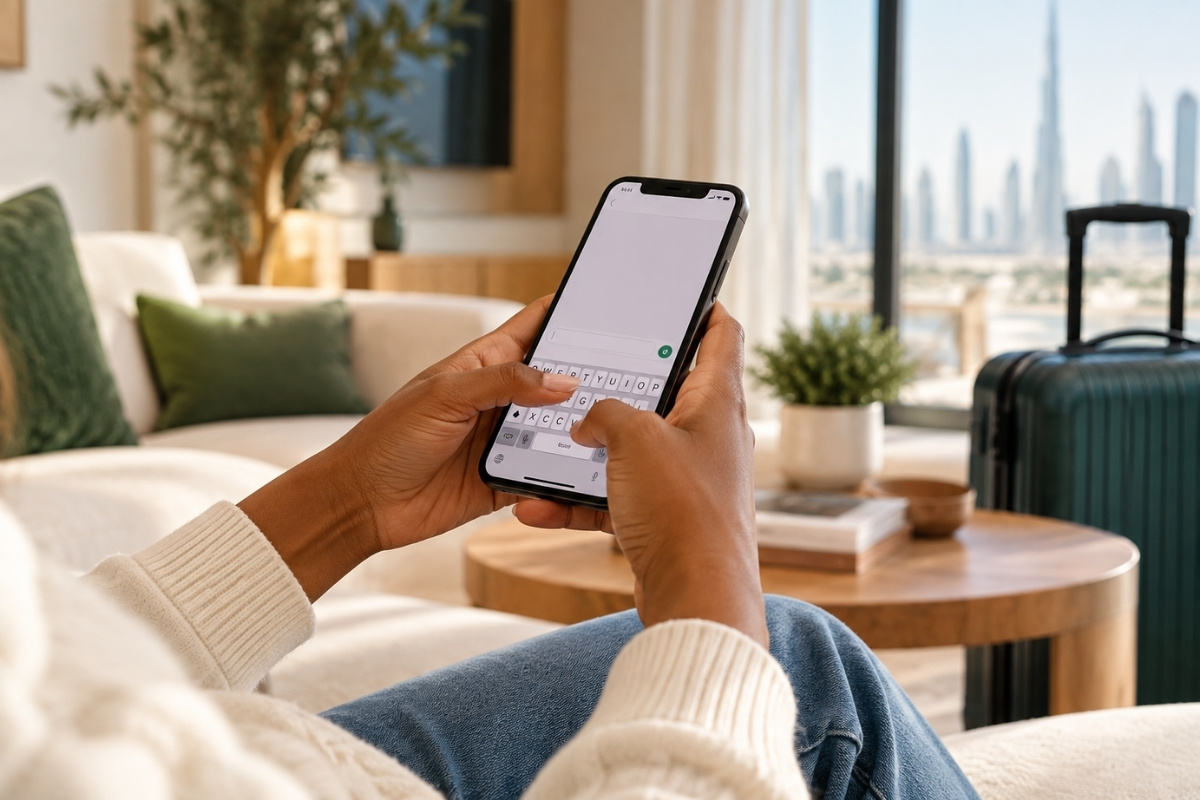
Photo by Homevy
They might send what looks like a booking enquiry, a complaint or an account verification request with a link to a fake Airbnb page.
If you enter your password, they could use it to change your payout details or deceive future guests through your listing.
What you’ll notice first:
What to do when you receive a fake guest message
How to reduce the risk: Enable two-factor authentication, use a unique password and give each authorised team member their own account access. Open Airbnb directly instead of following login links in messages.
What this means for Dubai property owners: DET registration and guest identity checks help establish who is staying at your property, but they don’t secure your Airbnb account.
If you work with a property management company, make sure account access is controlled and payout changes are verified.
A booking is made for four guests, but a crowd arrives instead. What looked like an ordinary weekend reservation can quickly become a problem involving property damage, neighbour complaints and safety risks.
When a guest deliberately hides the group size or uses a booking to host an unauthorised party, it goes beyond an ordinary house-rule violation.
What you’ll notice first:
None of these signs proves a guest intends to host a party. They are reasons to verify the booking details and apply the same checks consistently.
How Dubai’s rules help protect owners: Holiday-home operators must comply with DET requirements and applicable building rules.
Guest registration helps establish who is staying at the property, while access controls and building security can help identify unauthorised visitors.
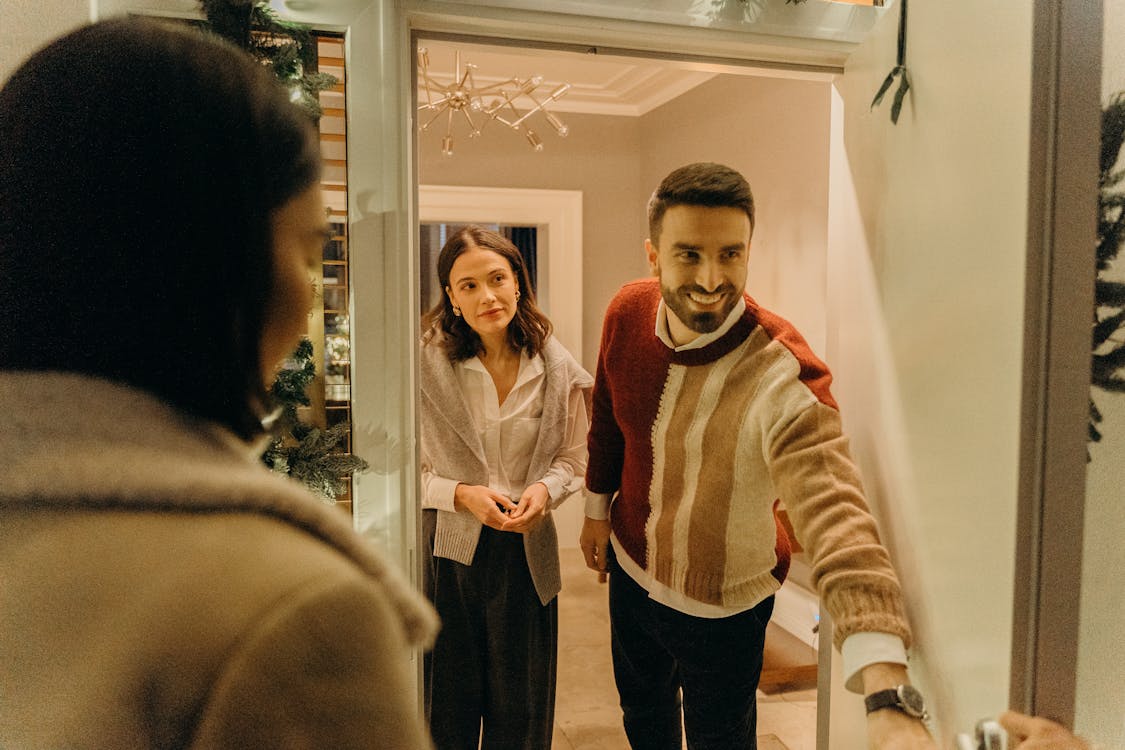
Photo by Cottonbro Studio
Parties can also breach property rules and create grounds for escalation.
What to do: If an unauthorised party is underway, prioritise safety. Contact the police if there is a safety risk, notify building security where appropriate and contact Airbnb through its safety channels.
Preserve relevant evidence, such as neighbour reports and permitted noise-monitor alerts, before requesting eligible compensation.
How to reduce the risk:
Airbnb’s automated reservation screening is not available in every market.
Dubai property owners should therefore have reliable guest-screening and check-in procedures rather than relying on the platform alone. See our guide to screening Airbnb guests within Airbnb’s rules.
For owners who don’t want to manage these Airbnb guest checks themselves, a professional property management company like Homevy can coordinate guest screening, in-person check-in and ongoing property oversight.
A guest reports that the apartment is dirty, something is broken or an amenity doesn’t work, then asks for a refund.
Sometimes the complaint is genuine. In other cases, a guest may exaggerate a problem or threaten a negative review to pressure the host into paying.
What you’ll notice first:
These are warning signs, not proof of fraud. A guest can have a legitimate complaint even when you disagree with their assessment.
What to do:
How Dubai property owners can protect themselves from scam refunds
Not every refund request is a scam. The same records that help challenge dishonest claims can reveal when a complaint is justified. Fix genuine problems promptly, and use Airbnb’s dispute process when the evidence suggests a claim is unfair.
If a review violates Airbnb’s policies, see our guide to getting an unfair Airbnb review fixed.
A guest makes a booking under a verified account, but someone else arrives.
Or the property is used for an unauthorised purpose, such as a commercial shoot or letting the unit to other people.
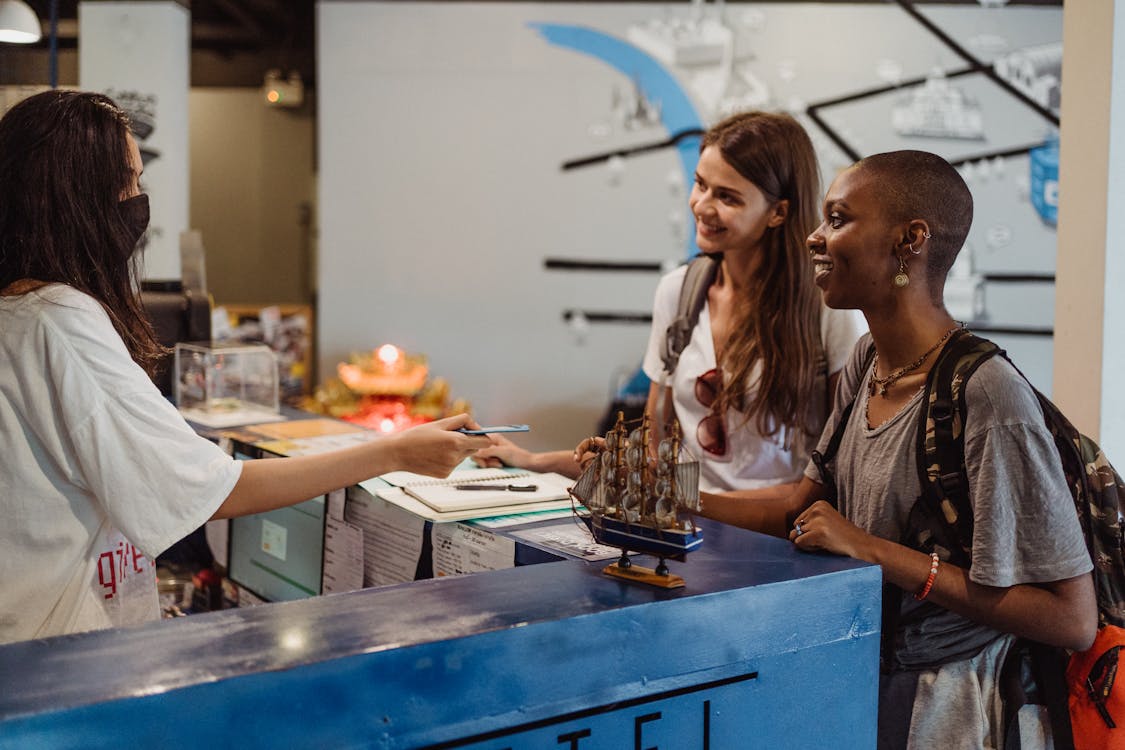
Photo by Ketut Subiyanto
These situations can expose owners to property damage, unauthorised access and potential compliance issues.
What you’ll notice first:
How Dubai’s rules help protect owners
How to reduce the risk: Verify booking details at check-in, register every guest as required, apply building access rules and never share sensitive property documents unnecessarily.
If you work with a professional management company, confirm that it has a consistent process for guest verification and registration.
Dubai’s requirements don’t eliminate identity fraud, but they give owners and operators a structured process for checking who is staying in their properties and addressing discrepancies.
Guest theft can range from a missing television to valuable furniture and appliances disappearing after checkout. For property owners, the challenge is noticing what’s missing quickly and having the records to support a claim.
What you’ll notice first:
What to do after discovering a guest left with your property items
How to reduce the risk:
For the full claims process, see our guide to handling guest damage and filing a claim.
For owners working with Homevy, post-checkout inspections and property documentation help identify problems promptly, giving the team a clearer basis for coordinating repairs and pursuing eligible claims.
A guest books for several weeks, then stops paying or refuses to leave when the reservation ends. In some US jurisdictions, extended stays can trigger tenant protections that complicate removal.
What you’ll notice first:
What to do: Keep booking and payment records, contact Airbnb if applicable, and seek legal advice if a guest refuses to leave. Don’t change locks or cut utilities without confirming what the law permits.
How Dubai protects owners against long stay Airbnb bookings
Dubai regulates holiday homes through a dedicated licensing and permitting framework.
This gives owners a defined process for operating legally, but it doesn’t guarantee that every overstay can be resolved immediately.
How to reduce the risk: Set clear checkout and extension terms, confirm changes in writing, and act promptly when a guest disputes their departure date. If you work with Homevy, our team can help manage bookings and check-outs, reducing the day-to-day burden on owners.
AirCover for Hosts offers up to $3 million in host damage protection, $1 million in liability insurance, guest identity verification and a 24-hour safety line.
Photo by Homevy
But protection has conditions, deadlines and exclusions. Airbnb also makes clear that host damage protection isn’t insurance.
| Protection | What to know |
| Guest damage or theft | Eligible claims may be covered up to $3 million, subject to exclusions and evidence requirements. |
| Claim deadlines | Request payment within 14 days of checkout and follow Airbnb’s formal claim deadlines. |
| Evidence | Keep photos, receipts, inventories and repair estimates. |
| Off-platform payments | Moving payments outside Airbnb can affect your protection. |
| Security deposits | Most hosts can’t request separate security deposits under Airbnb’s rules. |
| Cameras | Indoor cameras are prohibited. Outdoor cameras must meet Airbnb’s disclosure rules. |
| Reservation screening | Automated screening availability varies by country. |
For Dubai owners, AirCover is one layer of protection, not a substitute for DET compliance, guest registration and property inspections.
Document every stay and act quickly when something goes wrong.
Your first hour decides whether you recover anything. Secure people first, then evidence, then money.
Keep every message on Airbnb, photograph before you touch anything, and call the police where a crime or safety risk is involved.
What you don’t do matters just as much as what you do.
| Situation | Do first | Then | Don’t |
| Suspicious message or payment request | Stop. Don’t click or pay | Report the message to Airbnb | Move the chat to WhatsApp or email |
| Party in progress | Call police if anyone is at risk | Contact Airbnb’s safety line. Record evidence | Walk into a crowd alone |
| Damage or theft found at checkout | Photograph every room in full | Police report for theft. Request payment within 14 days | Clean or repair first |
| Refund demand or review threat | Reply politely, offer a fix | Send evidence. Screenshot and report threats | Trade a refund for a review |
| Wrong person at check-in | Don’t hand over access | Contact Airbnb | Argue on the doorstep |
| Guest won’t leave | Contact Airbnb support | Speak to a local lawyer | Change locks or cut utilities |
| Account looks compromised | Change password, log out all devices | Check payouts, contact Airbnb | Wait to see if it happens again |
What does your setup look like if one of these happens at 2am while you’re asleep or abroad? That’s the real test of whether you’re protected.
Dubai’s holiday-home regulations give property owners and operators safeguards that can make certain guest scams harder to pull off.
Here’s what that means in practice:
These rules and regulations don’t eliminate fraud, but they can make identity discrepancies and property misuse easier to detect. For owners, the key is ensuring that registration, check-in and property oversight are handled consistently.
At Homevy, scam prevention is part of how we manage properties. We screen guests before arrival, meet and register them at check-in, and inspect each apartment after checkout.

Photo by Homevy
These steps help us identify issues early and gather evidence while it’s still useful.
Here’s what that looks like day to day:
Early detection can reduce the risk of costly damage, disputes and negative reviews. Prompt documentation also helps when you need to pursue an eligible claim.
This attention to detail is part of Homevy’s approach to property management.
In 2026, Homevy was named Best Short-Term Rental Management Company in Dubai at the Arabian Best of the Best Awards.
Want a team to handle guest checks, check-ins and property oversight? Talk to Homevy about managing your Dubai property.
Yes. Airbnb hosts can face payment fraud, phishing, unauthorised parties, false refund claims and theft. Keep payments and booking communication on Airbnb where possible, screen guests consistently and document each checkout to reduce risk.
Watch for requests to pay outside Airbnb, suspicious overpayments, unexpected verification links, booking details that don’t match the arriving guest, and pressure to issue refunds in exchange for avoiding a negative review. These are warning signs, not proof of fraud.
Report the incident to Airbnb, preserve messages and other evidence, and contact the police if theft or a safety issue is involved.
For eligible damage claims, follow Airbnb’s deadlines and documentation requirements. Host damage protection may cover qualifying losses up to $3 million, subject to its terms and exclusions.
For an Airbnb booking, the payment dispute generally involves Airbnb and the relevant payment provider, depending on how the transaction was processed.
With direct bookings, you may be responsible for responding to chargebacks as the merchant. Keep booking agreements, payment records and communication to support your case.
Airbnb generally restricts hosts from collecting separate security deposits, although limited exceptions may apply under its policies.
Hosts can use Airbnb’s Resolution Center to request payment for eligible damage or other covered costs. Check Airbnb’s current rules before collecting any deposit outside the platform.
Airbnb prohibits indoor security cameras, even if switched off. Disclosed outdoor cameras may be permitted under its current policy, subject to location and privacy requirements. Noise monitors that measure sound levels without recording audio may also be allowed if properly disclosed and compliant with Airbnb’s rules.
Guest scams can happen in Dubai, but holiday-home registration requirements and building access procedures provide additional safeguards.
Registering guests with the Department of Economy and Tourism helps operators identify discrepancies, while applicable occupancy rules and security procedures can help flag unauthorised visitors. These measures reduce certain risks but cannot prevent every scam.
Protecting a holiday home takes more than spotting suspicious messages. It means checking guests before arrival, verifying details at check-in, documenting property conditions and responding quickly when something goes wrong.
Homevy handles these tasks for property owners across Dubai. We screen and register guests, manage booking communication, inspect properties after each stay and coordinate responses to issues promptly.
You don’t have to manage every check-in, checkout or unexpected problem yourself.

Get access to our 5-day training course on managing your vacation rental property in Dubai.
Download Guide