

Learn How To Manage Your Rental Property on Airbnb
Get access to our 5-day training course on managing your vacation rental property in Dubai.
Download Guide
Furnished Finder vs Airbnb isn’t just a question of which platform charges less.
The bigger question is how much revenue you keep after accounting for:
At Homevy, we manage Dubai holiday homes across Airbnb and other booking channels, handling both nightly and monthly stays. This gives us first-hand insight into how platform fees, booking gaps, stay lengths and day-to-day operating costs affect a property’s rental income.
We’ve learned that the platform with the lowest fee doesn’t always deliver the best return. What matters is how much your property earns after accounting for empty periods between bookings, operating costs and the work involved in managing each stay.
Let’s break it down.
Furnished Finder is a US listing board for furnished stays of 30 days or more.
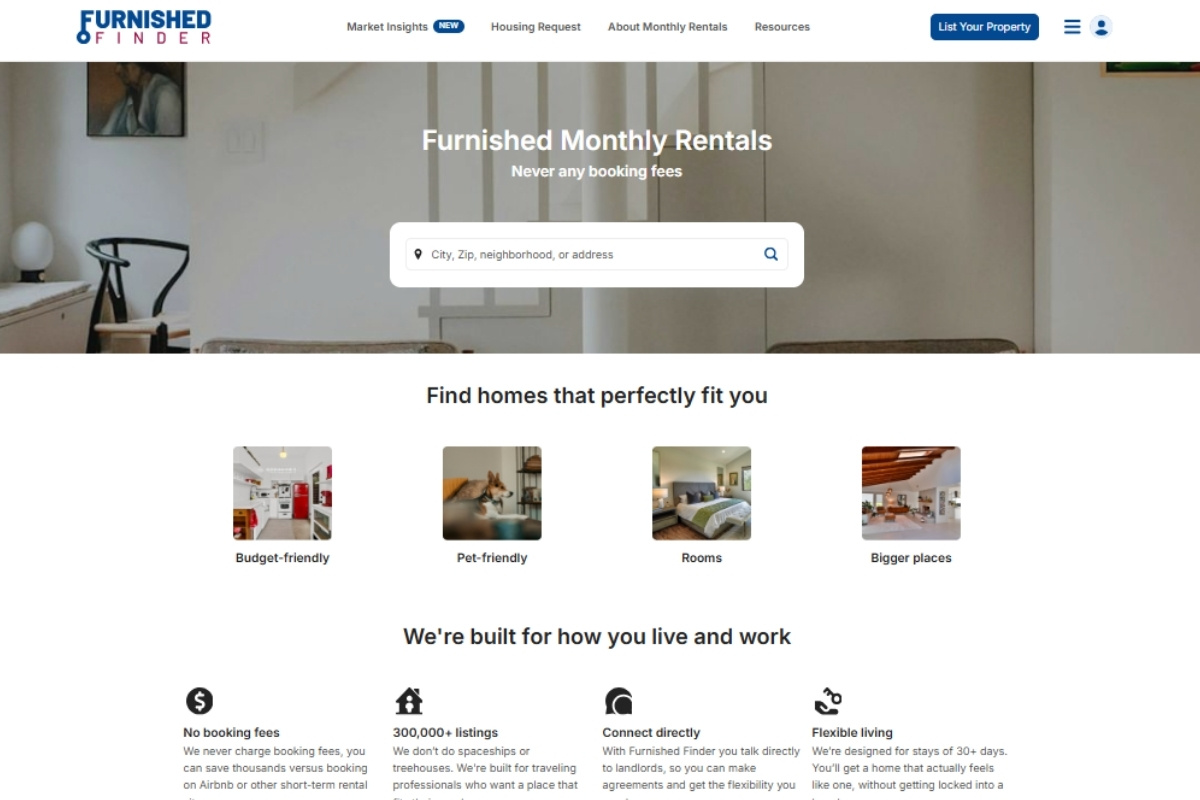
Screenshot from Furnished Finder
Airbnb is a global booking marketplace that handles nightly, weekly and monthly stays.
The table below shows how they compare for hosts:
| Details | Furnished Finder | Airbnb |
| What it is | Listing board; you rent directly to the tenant | Booking marketplace; Airbnb handles the transaction |
| Host fee | $199/year per listing, no commission | 15.5% of each booking for most hosts |
| Tenant/guest fee | None | None under the single fee; 14.1-16.5% on older split-fee bookings |
| Minimum stay | 30 days | Your choice; 28+ nights counts as a monthly stay |
| Average stay | About three months (platform-reported) | Mostly short stays |
| Rent collection | You arrange it (optional Baselane payments) | Airbnb collects monthly |
| Lease | Yours (templates available) | Airbnb’s terms plus your house rules |
| Screening | Optional, $44.99 paid by the tenant | ID verification; no credit check |
| Cancellations | Your own policy | Airbnb’s long-term Firm or Strict policy |
| Damage cover | Optional paid plan, “not insurance” | AirCover included |
| Where it works | US only | 220+ countries and regions |
Furnished Finder is cheaper because it does less. Airbnb costs more, but it handles more of the transaction for you.
Furnished Finder charges $199 a year per listing, with no booking fees or commission.
Airbnb now charges most hosts a 15.5% single service fee in Dubai. deducted from each booking.
The fee also applies to longer stays, so a three-month booking is charged 15.5% across all three months.
Furnished Finder’s main host cost is its annual listing fee:
There are no booking commissions on top of the annual listing fee, and tenants don’t pay to use the platform.
But the low platform fee comes with a different cost: more responsibility for the host.
Furnished Finder connects you with potential tenants, but you handle the rental relationship yourself. That means arranging the lease, collecting rent, managing deposits and dealing with disputes.
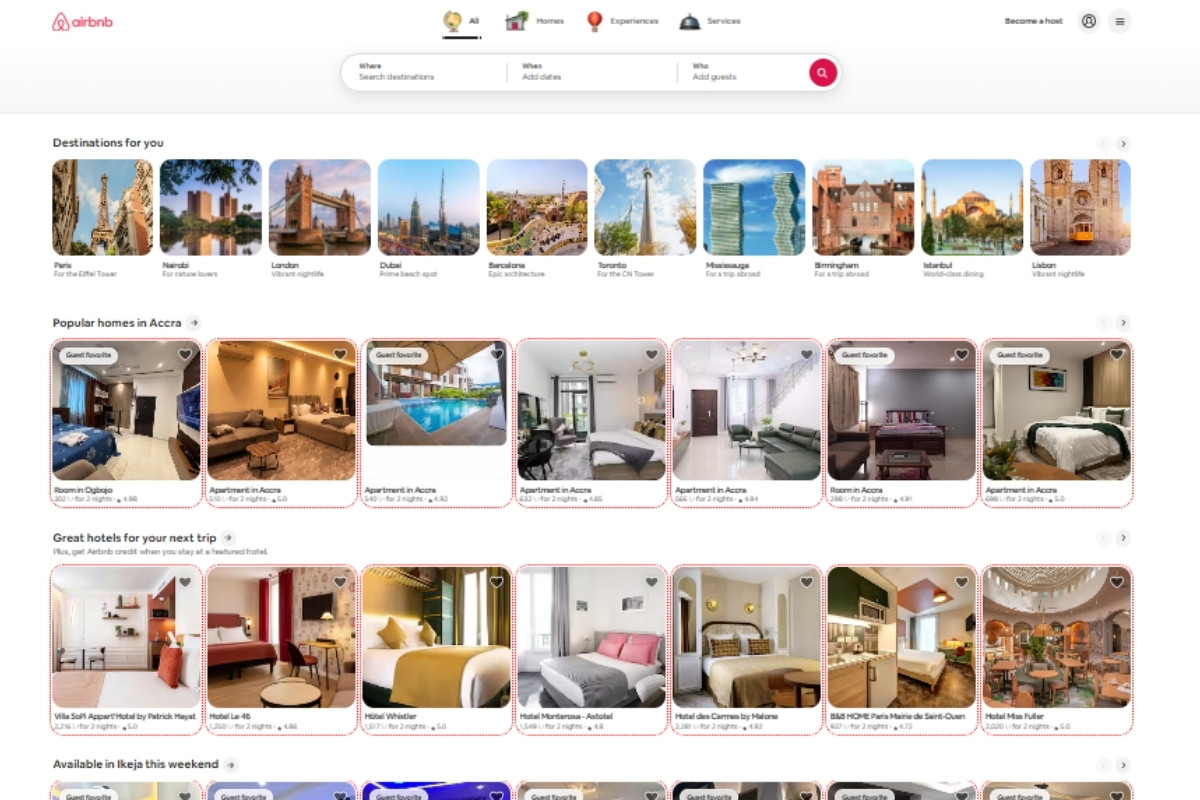
Airbnb has moved from its split-fee structure to a host-only fee, combining the host and guest service fees into a single charge paid by the host.
Screenshot from Airbnb
Most hosts now pay 15.5% of the booking subtotal, deducted from their payout.
It covers part of the infrastructure Airbnb provides around the booking.
The platform handles:
In a comparison of Airbnb vs Furnished Finder, you’re not just differentiating $199 from 15.5%. You’re evaluating how much of the rental process you want to handle yourself.
The biggest difference between Furnished Finder and Airbnb is what happens after the tenant or guest books.
With Airbnb, the platform handles the payment flow, applies its cancellation policies and provides a resolution process if something goes wrong.
Photo by Homevy
Furnished Finder leaves much more of that responsibility with you. Its terms state that it isn’t a party to the rental agreement or responsible for mediating disputes.
Here’s who handles what:
| Job | Furnished Finder | Airbnb |
| Rent collection | You, directly or through Baselane | Airbnb collects the guest’s monthly payment and pays you out |
| Lease | You write it, with lawyer-vetted templates available | Airbnb’s terms plus your house rules |
| Security deposit | You collect and return it | Usually none; AirCover instead |
| Tenant screening | Optional TransUnion check, $44.99 paid by the tenant | Airbnb’s ID verification; no credit check |
| Cancellations | You set and enforce the policy | Airbnb applies its long-term Firm or Strict policy |
| Damage | Your deposit or an optional paid plan from $54.99/month per unit | AirCover: up to $3M in damage protection and $1M in liability coverage |
| Disputes | Between you and the tenant | Airbnb’s resolution process |
If you choose Furnished Finder because you want to avoid Airbnb’s 15.5% host fee, you’re also taking on the work Airbnb doesn’t do for you. That means leases, rent collection, deposits, tenant communication and disputes.
With Homevy, you don’t have to choose between earning from monthly stays and managing the entire tenancy yourself.
Homevy handles the day-to-day work behind the property, from guest communication and check-ins to cleaning, maintenance and property operations.
We can also help determine whether a nightly, monthly or longer stay makes more sense for the property based on demand and performance.
The goal isn’t simply to find the platform with the lowest fee. It’s to make sure your property actually performs well after all the costs and work are considered.
At the same monthly rent, Furnished Finder leaves you with more money because its fee is fixed, while Airbnb’s grows with every booking.
Photo by Homevy
But that advantage disappears if Furnished Finder leaves your property empty for longer between tenants.
At $2,500 a month, the tipping point is roughly two extra empty weeks per three-month stay.
Here’s the maths, using each platform’s current fees and the same $2,500 monthly rent.
| Cost or earnings | Furnished Finder | Airbnb (15.5% single fee) |
| Platform cost per month | About $16.58 | $387.50 |
| Platform cost over a three-month stay | About $49.75 | $1,162.50 |
| What you keep from three months’ rent | About $7,450.25 | $6,337.50 |
At $2,500 a month, Furnished Finder saves you about $1,113 in platform fees over three months.
But if your property sits empty for two extra weeks while you look for your next tenant, that saving can disappear quickly.
Before choosing Furnished Finder, consider how quickly you can find your next tenant and whether Airbnb could fill those empty dates. Also, factor in the time you’ll spend handling leases, deposits and rent collection yourself.
The comparison assumes the same monthly price on both platforms. Under Airbnb’s single-fee structure, guests don’t see a separate service fee, so the total guest price can match.
It also covers platform costs only. Cleaning, utilities and furnishing costs are excluded.
And remember, the platform fee is only one part of the calculation. You still have to fill the calendar, manage guest or tenant communication, coordinate cleaning and maintenance, and keep the property ready for the next stay.
Don’t want to manage the operational work involved in booking and managing guests? Speak to Homevy about managing your property.
Switching from Airbnb to Furnished Finder makes sense if your property attracts steady stays of 30 days or more and you’re comfortable managing tenants yourself.
Using both can make more sense if Furnished Finder brings longer bookings and Airbnb helps fill the gaps between them.
The catch? Managing two platforms means keeping calendars, pricing and bookings aligned. Furnished Finder imports calendars, but updates can take up to 24 hours. One missed booking can leave you with an awkward double-booking situation.
At Homevy, we don’t believe property owners should have to choose between Airbnb and other booking platforms.
Photo by Homevy
We list properties across multiple channels, helping owners reach different types of guests and make the most of nightly and monthly stays.
We also handle the day-to-day operations, including guest communication, check-ins, cleaning and maintenance. You don’t have to manage separate bookings and turnovers yourself just to reach more guests.
Of course, using multiple platforms isn’t automatically better for every property. If your nightly bookings already perform well, or you don’t want the responsibility of managing leases and collecting rent, adding Furnished Finder yourself may create more work than value.
The goal is to find the right mix of bookings for your property, without turning your rental investment into another full-time job.
Furnished Finder works best for smaller furnished units near steady sources of mid-term tenants: hospitals, large employers, military bases and universities.
Airbnb suits larger homes, leisure locations and owners who want to mix nightly and monthly stays.
Before you pay $199, check whether your property actually has mid-term demand.
Run through this checklist first:
If you answer “no” to the first two, Airbnb’s monthly-stay settings are probably the better starting point.
Airbnb gives hosts more built-in protection. It handles payments, applies cancellation policies and includes AirCover for eligible damage claims.
Furnished Finder works differently. It doesn’t provide insurance or mediate rental disputes, so you’re responsible for your lease, deposit, tenant screening and payment collection.
Here’s what that means:
If a guest gains tenant rights, getting them to leave may require formal legal proceedings, including eviction through the courts. Booking through a platform doesn’t exempt you from local law.
Switching from Airbnb to Furnished Finder makes sense if your property is based in the US, attracts steady stays of 30 days or more and you’re comfortable managing tenants yourself.
Using both can make more sense if Furnished Finder brings longer bookings and Airbnb helps fill the gaps between them.
No. Furnished Finder focuses on the US market, so property owners in Dubai need other channels to attract monthly tenants.
That usually means Airbnb, Booking.com and direct enquiries.
A few things work differently in Dubai:
At Homevy, we don’t believe you should have to choose between monthly and nightly stays. We list the Dubai properties we manage across multiple booking channels, helping owners reach different types of guests as demand changes.
We also handle the day-to-day operations behind those bookings, from guest communication and check-ins to cleaning and maintenance. That means you can benefit from different stay lengths without managing every booking yourself.
Furnished Finder charges a flat $199 a year because it’s a listing board, not a booking platform.
It doesn’t collect rent, hold deposits, enforce cancellations or settle disputes. You do all of that yourself. Airbnb’s 15.5% fee pays for those services.
It can be, if your property sits near steady mid-term demand and you’re comfortable acting as a landlord.
At the same rent, Furnished Finder keeps more money in your pocket. Airbnb can come out ahead if it fills your calendar faster and leaves fewer empty weeks between stays.
No. Under Airbnb’s single 15.5% fee, the host fee is the same whatever the stay length.
On older split-fee bookings, Airbnb reduces the guest’s service fee for stays over a month, but the host fee doesn’t change.
Yes, but manage your calendar carefully. Furnished Finder can import one Airbnb calendar per listing, with updates taking up to 24 hours, and it doesn’t send bookings back to Airbnb. Block dates on Airbnb as soon as a Furnished Finder tenant confirms.
No. Furnished Finder only operates in the United States. In Dubai, owners take monthly stays through Airbnb, Booking.com and direct bookings, and a holiday home permit covers monthly stays as well as nightly ones.
At Homevy, we don’t believe property owners should have to choose between Airbnb and other booking platforms. We list properties across multiple channels, helping owners reach different types of guests and make the most of nightly and monthly stays.
We handle everything from guest communication and check-ins to cleaning, maintenance and owner reporting.
Our Homevy-managed properties achieve an average occupancy rate of 91.1%. With over 10,000 booked guest nights and Airbnb Superhost status, we focus on keeping properties performing without turning them into another full-time job for their owners.
Speak with Homevy about managing your Dubai property. Let us handle the day-to-day work while you focus on getting more from your property.


Get access to our 5-day training course on managing your vacation rental property in Dubai.
Download Guide